Wednesday, December 17, 2025
ADVT 
Interesting

Brain network behind superior reasoning skills identified

Darpan News Desk IANS, 04 Dec, 2014 10:31 AM
    Scientists have found mounting evidence that helps explain how humans have excelled in "relational reasoning" or superior reasoning.
     
    "Relational reasoning" is a cognitive skill in which we understand patterns to make sense of seemingly unrelated information.
     
    Subtle shifts in the frontal and parietal lobes of the brain are linked to superior cognition.
     
    "This research has led us to take seriously the possibility that tweaks to this network over an evolutionary time scale could help to explain differences in the way that humans and other primates solve problems," said principal investigator Silvia Bunge, neuroscientist at University of California, Berkeley.
     
    "It is not just that we humans have language at our disposal. We also have the capacity to compare and integrate several pieces of information in a way that other primates do not," Bunge noted.
     
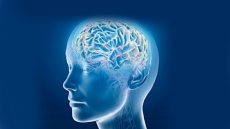
    The frontoparietal network in the brain plays a key role in analysis, memory retrieval, abstract thinking and problem-solving.
     
    Anatomical changes in the lateral frontoparietal network over millennia have served to boost human reasoning skills, explained researchers.
     
    "Given the supporting evidence across species, we posit that connections between these frontal and parietal regions have provided the necessary support for our unique ability to reason using abstract relations," said Michael Vendetti from University of California, Berkeley.
     
    Humans were found to use higher-order strategies to guide their judgement while non-human primates relied more on perceptual similarities and were slower at reasoning and problem-solving.
     
    "The findings allow us to gain insights into human intelligence by examining how we got to where we are by examining our changes across both evolution and development," Bunge concluded.
     
    The study appeared in the journal Neuron.

    MORE Interesting ARTICLES

    Fear of loss drives entrepreneurs

    Fear of loss drives entrepreneurs
    Loss aversion or fear of losing one's salary at a full-time job, along with its prestige is what drives most entrepreneurs and not a love of risk....

    Fear of loss drives entrepreneurs

    Male peacock doesn't sacrifice much to woo his lady

    Male peacock doesn't sacrifice much to woo his lady
    The magnificent plumage of the peacock may not be quite the sacrifice for love that it appears to be, researchers at the University of Leeds have found....

    Male peacock doesn't sacrifice much to woo his lady

    Can another drink relieve you from a hangover?

    Can another drink relieve you from a hangover?
    Is "hair of the dog" the best cure for hangover? According to a renowned author and journalist, another drink is the way to get rid of...

    Can another drink relieve you from a hangover?

    More siblings share same first initial: Facebook study

    More siblings share same first initial: Facebook study
    Have you noticed that more siblings nowadays share the same first initial? It is not a Kardashian sisters' trend but having the same...

    More siblings share same first initial: Facebook study

    How the brain detects fear

    How the brain detects fear
    The reason why the sight of a bomb or any other threatening object triggers panic in your mind may be that the brain prioritises threatening...

    How the brain detects fear

    Genes decide why some people love music

    Genes decide why some people love music
    Are you clueless about why your partner has an innate drive for music while you just cannot understand hip-hop or all that jazz? Blame it on your genes....

    Genes decide why some people love music