Friday, December 19, 2025
ADVT 
Interesting

How solitary cats find mates

Darpan News Desk IANS, 11 Nov, 2014 09:29 AM
  • How solitary cats find mates
Cats rely less on smell to hunt than dogs but they have genes related to an alternate form of smell that help them find mates, an analysis of the cat genome reveals.
 
These genes help our feline friends detect chemicals called pheromones which allow them to monitor their social environment, including seeking out the opposite sex, the findings showed.
 
“This ability is not as important to dogs, which tend to travel in packs. But it is crucial in cats, which are more solitary and may have more difficulty finding mates,” the researchers noted.
 
Although cats and humans have shared the same households for at least 9,000 years, they are more solitary than dogs.
 
"Cats, unlike dogs, are really only semi-domesticated," said senior author Wes Warren, associate professor of genetics at Washington University.
 
"They only recently split off from wild cats, and some even still breed with their wild relatives,” Warren added.
 
The researchers compared the genomes of domestic cats and wild cats, finding specific regions of the domestic cat genome that differed significantly.
 
The scientists found changes in the domestic cat's genes that other studies have shown are involved in behaviours such as memory, fear and reward-seeking.
 
These types of behaviours -- particularly those when an animal seeks a reward -- generally are thought to be important in the domestication process.
 
Cats also have better hearing than most other carnivores, including an ability to hear in the ultrasonic range to better track prey. Their vision is also exceptional in low light.
 
"Cats tend to be more active at dawn and dusk so they need to be able to detect movement in low light," said the study's first author Michael Montague from Washington University.
 
The study appeared in the journal Proceedings of the National Academy of Sciences Early Edition.
MORE Interesting ARTICLES

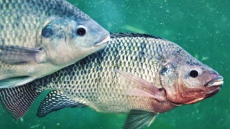
Male tilapia fish use urine to lure mates!

Male tilapia fish use urine to lure mates!
Native to southern Africa, Mozambican tilapia fish use urine to reduce aggressive behaviour in other males, lure females to the nests that they make...

Male tilapia fish use urine to lure mates!

Morning sex makes for a healthy start!

Morning sex makes for a healthy start!
Mornings are not just perfect for jogging or quieter moments in the park. Try sex in the wee hours that will sure improve your otherwise dull and boring day like never before!

Morning sex makes for a healthy start!

How birds learnt to fly

How birds learnt to fly
Birds have an innate ability to maneuver in mid-air, a talent that could have helped their ancestors learn to fly rather than fall from a perch, says a study...

How birds learnt to fly

Engage with babbling infants to improve language learning

Engage with babbling infants to improve language learning
"Parents may not understand a baby's prattling, but by listening and responding, they let their infants know they can communicate which leads to children...

Engage with babbling infants to improve language learning

Over-confident workers can put firms at risk

Over-confident workers can put firms at risk
Over-confident people can fool others into believing they are more talented than they actually are, claim two Indian-origin researchers, adding that these...

Over-confident workers can put firms at risk

How positive memories can replace negative experiences

How positive memories can replace negative experiences
By manipulating neural circuits in the brain of mice, scientists have found that memories and experiences - stored in two different parts of the brain...

How positive memories can replace negative experiences