Saturday, December 27, 2025
ADVT 
Interesting

Indian Man Kills Self; Makes It Look Like Murder For Insurance Claim

IANS, 08 Feb, 2017 01:27 PM
    Nearly a month after police registered a case of murder after a Kerala-based gold merchant was found hanging at a lodge in suburban Chembur, it has come to light that the man had actually committed suicide, but made it look like murder as he wanted his kin to claim the insurance amount of Rs. 5 lakh.
     
    Police have arrested three persons for abetment.
     
    According to investigators, deceased S Satish, who was debt-ridden, wanted his death to appear like a murder, so that his family could claim insurance.
     
    Satish's body was found hanging on January 14 with his wrist slit, following which, police had registered a case of murder.
     
    Police have arrested Martin, Riyaz, who was an aide of Satish, and Shravan on the charge of abetment of suicide in the course of investigation.
     
    "After the body was recovered, we lodged a case of murder and started investigating the matter. Based on the CCTV footage available at the lodge and other details, we arrested three persons, including Riyaz," Deputy Commissioner of Police (Zone VI) Shahaji Umap said today.
     
    It was discovered that the businessman had slit his wrist and asked his associate Riyaz to tie his hands to a bed.
     
    In order to make it look like a murder, he asked Riyaz to leave the room and lock it from outside. He later hanged himself from the ceiling fan, the official said.
     
    "Satish did this as he wanted his family to claim his insurance policy amount of Rs. five lakh," Mr Umap said.
     
    Satish had taken a home loan and was afraid that the bank might go after his family if it was established that he had committed suicide. He was also facing other business-related issues, police added.
     
    Further investigation into the matter is on.

    MORE Interesting ARTICLES

    Indian-Origin Researcher's Smart Textiles To Measure Illness

    Indian-Origin Researcher's Smart Textiles To Measure Illness
    Kunal Mankodiya, Director of the university's Wearable Biosensing Laboratory is researching how to transform gloves, socks, clothing and even shoes into high-tech items that will make people healthier -- and improve their lives.

    Indian-Origin Researcher's Smart Textiles To Measure Illness

    Universe Not Expanding At Accelerating Rate: Study

    Universe Not Expanding At Accelerating Rate: Study
    Challenging a standard cosmological concept, a team of researchers led by an Indian-origin scientist has found that the universe may not actually be expanding at an accelerating pace as was previously believed.

    Universe Not Expanding At Accelerating Rate: Study

    Expat Voting Ban Legit, Liberal Government Argues Despite Promised Change

    Expat Voting Ban Legit, Liberal Government Argues Despite Promised Change
    TORONTO — Allowing long-term Canadian expats to vote in federal elections is not a Constitutional requirement but a policy decision that Parliament has the right to make, the government plans to tell the country's top court.

    Expat Voting Ban Legit, Liberal Government Argues Despite Promised Change

    University Groups Try To Stave Off Offensive Costumes In Lead-up To Halloween

    TORONTO — Geishas are out. Feathered headdresses are forbidden. And if you're planning to wear a Bill Cosby or Caitlyn Jenner costume, you may not be welcome at your Halloween party of choice.

    University Groups Try To Stave Off Offensive Costumes In Lead-up To Halloween

    World's Most Expensive Potato Chips Cost $11 A Piece, Come in Boxes of Five

    World's Most Expensive Potato Chips Cost $11 A Piece, Come in Boxes of Five
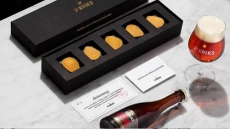
    In an attempt to create a special snack to go with their high quality beer, Sweetish brewery St. Erik's has created the world's most expensive potato chips.

    World's Most Expensive Potato Chips Cost $11 A Piece, Come in Boxes of Five

    Chinese Restaurant Adopts 'Pay What You Want' Policy, Loses $15,000 in a Week

    Chinese Restaurant Adopts 'Pay What You Want' Policy, Loses $15,000 in a Week
    A naive restaurant owner in Guiyang, China, who thought that appealing to people's inherent goodness would be a good way to attract customers to his new karst cave-themed restaurant, managed to lose over 100,000 RMB in just seven days.

    Chinese Restaurant Adopts 'Pay What You Want' Policy, Loses $15,000 in a Week