Thursday, December 25, 2025
ADVT 
Interesting

Indian Origin Student's Device To Keep Disaster-Hit Areas Connected

Darpan News Desk IANS, 16 Aug, 2016 11:41 AM
    Disruptions in phone connectivity in disaster-hit areas could soon be a thing of the past -- thanks to a device developed by an Indian-origin student at Britain's Staffordshire University.
     
    The new device known as “Exigency” was designed by Luqmaan Patel, a university statement said.
     
    The device developed by 21-year-old Patel uses Ad-Hoc Network which receives satellite data and transmits it as cellular data to ensure that everyone within 2.5 km radius has access to basic phone communications.
     
    Though his design is only a temporary solution, Patel hopes that it will make people think about a more efficient solution for overcoming communication difficulties experienced during natural disasters and ensure that communications are reliable and easily accessible for everyone in the affected zones. 
     
    During the time of a disaster, communication can completely collapse and transmit nothing for at least three days thus leaving everyone stranded. Patel felt this was an issue he had to address.
     
    "I felt that it was a very long time for a victim to inform anyone about their wellbeing or to call for help,” he stated in the statement.
     
    Through further research he found that if you reduced the initial impact stage of up to three days by one single day, it would reduce the overall recovery of the country by a thousand days.
     
    It would help organisations to connect with one another more effectively and share relevant data, all the while making the recovery swift and efficient. 
     
    These were few of the factors that came to his mind and inspired him to come up with an efficient solution to the issue of creating effective communication service.
     
    He felt that his device should bring a focus to communications, and clear the communication infrastructure in the horrible event of a natural disaster.

    MORE Interesting ARTICLES

    New York's first cat cafe opens next month

    New York's first cat cafe opens next month
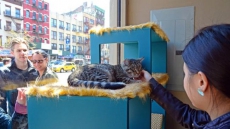
    New York City cat lovers will be able to tuck in with tabbies next month, when a cafe opens offering feline companionship, a trend imported from Asia which has...

    New York's first cat cafe opens next month

    'Friendly' plants become more diverse

    'Friendly' plants become more diverse
    A study co-authored by Indian-origin scientist Anurag Agrawal has found that when plants develop mutually beneficial relationships with animals...

    'Friendly' plants become more diverse

    DNA analysis to help identify occupant of Greece tomb

    DNA analysis to help identify occupant of Greece tomb
     After the discovery of a human skeleton at the Amphipolis burial complex in northern Greece this week, the focus of experts has turned to the DNA testing...

    DNA analysis to help identify occupant of Greece tomb

    New world record set with 333 km/hour bicycle ride

    New world record set with 333 km/hour bicycle ride
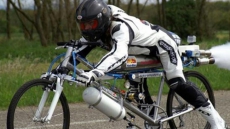
    French daredevil Francois Gissy set a new world record for the highest speed attained while riding a bicycle - reaching a gut churning speed of 333 km/hour in 4.8 seconds....

    New world record set with 333 km/hour bicycle ride

    'Love hormone' shoo away fear

    'Love hormone' shoo away fear
    “Under Oxytocin's influence, the expectation of recurrent fear subsequently abates to a greater extent,” explained Rene Hurlemann from....

    'Love hormone' shoo away fear

    How late developers can change their destiny

    How late developers can change their destiny
    My teachers always told my parents: "Er, he's probably a late developer." Years later, I'm beginning to ask how late is late, exactly? This side of the after-life?

    How late developers can change their destiny