Thursday, December 25, 2025
ADVT 
Interesting

Indian Origin Student's Device To Keep Disaster-Hit Areas Connected

Darpan News Desk IANS, 16 Aug, 2016 11:41 AM
    Disruptions in phone connectivity in disaster-hit areas could soon be a thing of the past -- thanks to a device developed by an Indian-origin student at Britain's Staffordshire University.
     
    The new device known as “Exigency” was designed by Luqmaan Patel, a university statement said.
     
    The device developed by 21-year-old Patel uses Ad-Hoc Network which receives satellite data and transmits it as cellular data to ensure that everyone within 2.5 km radius has access to basic phone communications.
     
    Though his design is only a temporary solution, Patel hopes that it will make people think about a more efficient solution for overcoming communication difficulties experienced during natural disasters and ensure that communications are reliable and easily accessible for everyone in the affected zones. 
     
    During the time of a disaster, communication can completely collapse and transmit nothing for at least three days thus leaving everyone stranded. Patel felt this was an issue he had to address.
     
    "I felt that it was a very long time for a victim to inform anyone about their wellbeing or to call for help,” he stated in the statement.
     
    Through further research he found that if you reduced the initial impact stage of up to three days by one single day, it would reduce the overall recovery of the country by a thousand days.
     
    It would help organisations to connect with one another more effectively and share relevant data, all the while making the recovery swift and efficient. 
     
    These were few of the factors that came to his mind and inspired him to come up with an efficient solution to the issue of creating effective communication service.
     
    He felt that his device should bring a focus to communications, and clear the communication infrastructure in the horrible event of a natural disaster.


    MORE Interesting ARTICLES

    Ancient DNA reveals Europeans had sex with Neanderthals

    Ancient DNA reveals Europeans had sex with Neanderthals
     According to a study, there is a surprising genetic unity between the earliest known Europeans and contemporary Europeans....

    Ancient DNA reveals Europeans had sex with Neanderthals

    How to invest for public good and returns

    How to invest for public good and returns
    A leading US think tank has launched a new report to encourage impact investing or enabling private investment for public good and financial returns with...

    How to invest for public good and returns

    Long-lost secrets of extinct Dodo revealed

    Long-lost secrets of extinct Dodo revealed
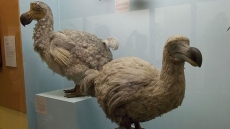
    A new laser 3D scan of the extinct flightless bird dodo has exposed portions of its anatomy previously unknown to science, revealing secrets about....

    Long-lost secrets of extinct Dodo revealed

    Observation: Key To Learning Dance Better

    Observation: Key To Learning Dance Better
    The best way to master dancing is to imbibe the art of observing the sequences demonstrated by the instructor and not merely listening to spoken...

    Observation: Key To Learning Dance Better

    First selfie dates back 175 years!

    First selfie dates back 175 years!
    In 1839, 30-year-old Robert Cornelius took the world's first self-portrait or selfie at the back of his father's shop in Philadelphia, Mashable reported.....

    First selfie dates back 175 years!

    Beak: a part of male hummingbird weaponry

    Beak: a part of male hummingbird weaponry
    Male hummingbirds use their long and sharp bills to not only probe flowers for nectar but also as a weapon while fighting over a mate, new research says.....

    Beak: a part of male hummingbird weaponry