Friday, December 26, 2025
ADVT 
Interesting

Indian Origin Student's Device To Keep Disaster-Hit Areas Connected

Darpan News Desk IANS, 16 Aug, 2016 11:41 AM
    Disruptions in phone connectivity in disaster-hit areas could soon be a thing of the past -- thanks to a device developed by an Indian-origin student at Britain's Staffordshire University.
     
    The new device known as “Exigency” was designed by Luqmaan Patel, a university statement said.
     
    The device developed by 21-year-old Patel uses Ad-Hoc Network which receives satellite data and transmits it as cellular data to ensure that everyone within 2.5 km radius has access to basic phone communications.
     
    Though his design is only a temporary solution, Patel hopes that it will make people think about a more efficient solution for overcoming communication difficulties experienced during natural disasters and ensure that communications are reliable and easily accessible for everyone in the affected zones. 
     
    During the time of a disaster, communication can completely collapse and transmit nothing for at least three days thus leaving everyone stranded. Patel felt this was an issue he had to address.
     
    "I felt that it was a very long time for a victim to inform anyone about their wellbeing or to call for help,” he stated in the statement.
     
    Through further research he found that if you reduced the initial impact stage of up to three days by one single day, it would reduce the overall recovery of the country by a thousand days.
     
    It would help organisations to connect with one another more effectively and share relevant data, all the while making the recovery swift and efficient. 
     
    These were few of the factors that came to his mind and inspired him to come up with an efficient solution to the issue of creating effective communication service.
     
    He felt that his device should bring a focus to communications, and clear the communication infrastructure in the horrible event of a natural disaster.

    MORE Interesting ARTICLES

    How people's brains get synchronised during movies

    How people's brains get synchronised during movies
    Uri Hasson, a psychologist at Princeton University analysed brain scan data his team collected as people watched several different video clips....

    How people's brains get synchronised during movies

    Male tilapia fish use urine to lure mates!

    Male tilapia fish use urine to lure mates!
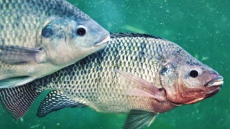
    Native to southern Africa, Mozambican tilapia fish use urine to reduce aggressive behaviour in other males, lure females to the nests that they make...

    Male tilapia fish use urine to lure mates!

    Morning sex makes for a healthy start!

    Morning sex makes for a healthy start!
    Mornings are not just perfect for jogging or quieter moments in the park. Try sex in the wee hours that will sure improve your otherwise dull and boring day like never before!

    Morning sex makes for a healthy start!

    How birds learnt to fly

    How birds learnt to fly
    Birds have an innate ability to maneuver in mid-air, a talent that could have helped their ancestors learn to fly rather than fall from a perch, says a study...

    How birds learnt to fly

    Engage with babbling infants to improve language learning

    Engage with babbling infants to improve language learning
    "Parents may not understand a baby's prattling, but by listening and responding, they let their infants know they can communicate which leads to children...

    Engage with babbling infants to improve language learning

    Over-confident workers can put firms at risk

    Over-confident workers can put firms at risk
    Over-confident people can fool others into believing they are more talented than they actually are, claim two Indian-origin researchers, adding that these...

    Over-confident workers can put firms at risk