Tuesday, December 30, 2025
ADVT 
Interesting

Indian-Origin Researcher's Smart Textiles To Measure Illness

Darpan News Desk IANS, 25 Oct, 2016 01:02 PM
    What if clothes and other wearable items can sense your illness and transmit data to a doctor in a distant clinic for monitoring your health and prescribing drugs? This could be possible, thanks to new research by an Indian-origin scientist at University of Rhode Island.
     
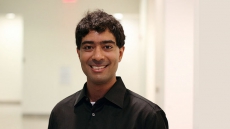
    Kunal Mankodiya, Director of the university's Wearable Biosensing Laboratory is researching how to transform gloves, socks, clothing and even shoes into high-tech items that will make people healthier -- and improve their lives.
     
    "We are in the era of game-changing technology, especially in health care," Mankodiya said.
     
    Mankodiya's research focuses on smart textiles -- wearable items embedded with sensors, electronics and software that can collect data from patients, even though they are at home, and deliver it to doctors. 
     
    Mankodiya's team is working on smart gloves that are embedded with sensors on the fingers and thumb that measure tremors and rigidity -- common symptoms of Parkinson's.
     
    The gloves, in turn, are connected to cell phones, which process the data and deliver it to neurologists in their offices. 
     
    This way, doctors can manage the treatment plan of the patient on a day-to-day basis, ensuring that medication is working properly and eliminating the need for patients to make stressful clinical visits.
     
    "Patients with Parkinson's face many mobility issues -- driving and even walking long distances," Mankodiya, an alumnus of Saurashtra University in Rajkot, Gujarat, said. 
     
    "The glove will give patients the option of receiving health care while remaining at home, and it also reduces the risk of falls and other accidents," he added.
     
    Mankodiya is also working on high-tech socks for people who have suffered strokes. Again, sensors and software woven into the fabric relay information about a patient's gait to doctors and physical therapists so they can tailor rehabilitation therapy to each patient.
     
    "The socks examine the walking stride," Mankodiya said in University of Rhode Island statement. 
     
    "They can quantify movements of the knee and ankle joints to find subtle irregularities that require therapy. The socks also monitor a patient's progress," he added.
     
    Other projects of his team focus on developing tools to image, sense and record brain function to treat Parkinson's, as well as other neurological diseases, like epilepsy. 

    MORE Interesting ARTICLES

    Why Women Are Better At Remembering Tasks-To-Do

    Why Women Are Better At Remembering Tasks-To-Do
    Now is the time to finally listen to your wife as women are better than men at remembering things to do, a new study finds.

    Why Women Are Better At Remembering Tasks-To-Do

    'Quarter Of Fresh Harvard Graduates Claims 10 Sex Partners'

    If we believe a latest Harvard University survey, 26 percent of students have had 10 or more sexual partners but 21 percent of senior students rate themselves still virgin.

    'Quarter Of Fresh Harvard Graduates Claims 10 Sex Partners'

    Mystery Of Disappearing Holes In Swiss Cheese Solved: The Milk's Too Clean!

    Mystery Of Disappearing Holes In Swiss Cheese Solved: The Milk's Too Clean!
    BERLIN — The mystery of Swiss cheese and its disappearing holes has been solved: The milk's too clean.

    Mystery Of Disappearing Holes In Swiss Cheese Solved: The Milk's Too Clean!

    Women Want More Sex As They Grow Older

    Women Want More Sex As They Grow Older
    A latest survey looking into women's sexual health has debunked the theory that women are not interested in sex as they get older.

    Women Want More Sex As They Grow Older

    India's Gagan Toor Suggests Winning Name For Mercury Crater To NASA

    India's Gagan Toor Suggests Winning Name For Mercury Crater To NASA
    Enheduanna, the name suggested by Gagan Toor of India, is one of the winners of a contest to name five new craters on the planet Mercury.

    India's Gagan Toor Suggests Winning Name For Mercury Crater To NASA

    'Dino-Chickens' : Indian-origin Researcher 'Grows' Dinosaur Snout In A Chicken In Lab

    'Dino-Chickens' : Indian-origin Researcher 'Grows' Dinosaur Snout In A Chicken In Lab
    In a first, a team led by an Indian-origin researcher has successfully replicated the molecular processes that led from dinosaur snouts to the first bird beaks -- by 'growing' the snout that replaced a chicken's beak in the lab.

    'Dino-Chickens' : Indian-origin Researcher 'Grows' Dinosaur Snout In A Chicken In Lab