Thursday, January 1, 2026
ADVT 
Interesting

Indian-Origin Researcher's Smart Textiles To Measure Illness

Darpan News Desk IANS, 25 Oct, 2016 01:02 PM
    What if clothes and other wearable items can sense your illness and transmit data to a doctor in a distant clinic for monitoring your health and prescribing drugs? This could be possible, thanks to new research by an Indian-origin scientist at University of Rhode Island.
     
    Kunal Mankodiya, Director of the university's Wearable Biosensing Laboratory is researching how to transform gloves, socks, clothing and even shoes into high-tech items that will make people healthier -- and improve their lives.
     
    "We are in the era of game-changing technology, especially in health care," Mankodiya said.
     
    Mankodiya's research focuses on smart textiles -- wearable items embedded with sensors, electronics and software that can collect data from patients, even though they are at home, and deliver it to doctors. 
     
    Mankodiya's team is working on smart gloves that are embedded with sensors on the fingers and thumb that measure tremors and rigidity -- common symptoms of Parkinson's.
     
    The gloves, in turn, are connected to cell phones, which process the data and deliver it to neurologists in their offices. 
     
    This way, doctors can manage the treatment plan of the patient on a day-to-day basis, ensuring that medication is working properly and eliminating the need for patients to make stressful clinical visits.
     
    "Patients with Parkinson's face many mobility issues -- driving and even walking long distances," Mankodiya, an alumnus of Saurashtra University in Rajkot, Gujarat, said. 
     
    "The glove will give patients the option of receiving health care while remaining at home, and it also reduces the risk of falls and other accidents," he added.
     
    Mankodiya is also working on high-tech socks for people who have suffered strokes. Again, sensors and software woven into the fabric relay information about a patient's gait to doctors and physical therapists so they can tailor rehabilitation therapy to each patient.
     
    "The socks examine the walking stride," Mankodiya said in University of Rhode Island statement. 
     
    "They can quantify movements of the knee and ankle joints to find subtle irregularities that require therapy. The socks also monitor a patient's progress," he added.
     
    Other projects of his team focus on developing tools to image, sense and record brain function to treat Parkinson's, as well as other neurological diseases, like epilepsy. 
    MORE Interesting ARTICLES

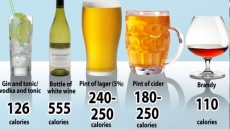
    Calorie Labels For Alcoholic Drinks Will Be On The Menu - But Not At The Bar

    Calorie Labels For Alcoholic Drinks Will Be On The Menu - But Not At The Bar
    WASHINGTON — Don't want to be confronted with the number of calories in that margarita or craft beer? Then avoid the menu and order at the bar.

    Calorie Labels For Alcoholic Drinks Will Be On The Menu - But Not At The Bar

    Microbial 'signatures' can nab sexual offenders

    Microbial 'signatures' can nab sexual offenders
    Bacterial communities living on an individual's pubic hairs could be used as a microbial "signature" to trace his involvement in sexual assault cases, say Australian researchers....

    Microbial 'signatures' can nab sexual offenders

    Know how cows communicate with their calves

    Know how cows communicate with their calves
    Cows use individualised calls to communicate with each other, a study that identified particular types of mother-offspring contact calls in cattle has showed....

    Know how cows communicate with their calves

    The Cult Of Culture: Merriam-webster Names 'Culture' Its 2014 Word Of The Year

    The Cult Of Culture: Merriam-webster Names 'Culture' Its 2014 Word Of The Year
    NEW YORK — A nation, a workplace, an ethnicity, a passion, an outsized personality. The people who comprise these things, who fawn or rail against them, are behind Merriam-Webster's 2014 word of the year: culture.

    The Cult Of Culture: Merriam-webster Names 'Culture' Its 2014 Word Of The Year

    Unhealthy environment tunes kids' genes for anti-social behaviour

    Unhealthy environment tunes kids' genes for anti-social behaviour
    Exposure to family conflict or sexual abuse could affect expression of certain genes and make your kids prone to delinquent behaviour, a new research has found...

    Unhealthy environment tunes kids' genes for anti-social behaviour

    Why frozen food isn't so bad

    Why frozen food isn't so bad
    Frozen food, considered a lazy cook's friend, can actually turn out to be a boon for saving you from grocery errands in the chilly winter. They also take...

    Why frozen food isn't so bad