Friday, April 3, 2026
ADVT 
Interesting

Indian-Origin Scientist Creates 'Real' 3D Hands In Laboratory

Darpan News Desk IANS, 21 Oct, 2016 01:40 PM
    An Indian-American researcher and his team have created life-size 3D hand models, complete with all five fingerprints using a high-resolution 3D printer that can produce the same ridges and valleys as a real finger.
     
    Like any optical device, fingerprint and hand scanners need to be calibrated, but currently there is no standard method for doing so.
     
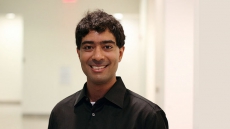
    "This is the first time a whole hand 3D target has been created to calibrate fingerprint scanners," said Distinguished Professor Anil Jain from Michigan State University (MSU). 
     
    "As a byproduct of this research, we realised a fake 3D hand, essentially a spoof, with someone's fingerprints, could potentially allow a crook to steal the person's identity to break into a vault, contaminate a crime scene or enter the country illegally," Jain cautioned.
     
    Jain and his biometrics team were studying how to test and calibrate fingerprint scanners commonly used across the globe at police departments, airport immigration counters, banks and even amusement parks. 
     
     
    To test the scanners, they created life-size 3D hand models complete with all five fingerprints.
     
    "Another application of this technology will be to evaluate the spoof-resistance of commercial fingerprint scanners. We have highlighted a security loophole and the limitations of existing fingerprint scanning technology, now it's up to the scanner manufacturers to design a scanner that is spoof-resistant," Jain noted in a university statement. 
     
    The study aims to design and develop standard models and procedures for consistent and reliable evaluation of fingerprint readers and is funded by the National Institute of Standards and Technology (NIST).
     
    "We are very pleased with this research and how it is showing the uncertainties in the process and what it can mean for the accuracy of the readers," said Nicholas Paulter, Group Leader for the Security Technologies Group at NIST and a co-author of the study. 
     
    The FBI, CIA, military and manufacturers will all be interested in this project, he added.
     
    Along with Jain and Paulter, the study was co-authored by Sunpreet Arora, MSU doctoral student. 

    MORE Interesting ARTICLES

    Why Women Are Better At Remembering Tasks-To-Do

    Why Women Are Better At Remembering Tasks-To-Do
    Now is the time to finally listen to your wife as women are better than men at remembering things to do, a new study finds.

    Why Women Are Better At Remembering Tasks-To-Do

    'Quarter Of Fresh Harvard Graduates Claims 10 Sex Partners'

    If we believe a latest Harvard University survey, 26 percent of students have had 10 or more sexual partners but 21 percent of senior students rate themselves still virgin.

    'Quarter Of Fresh Harvard Graduates Claims 10 Sex Partners'

    Mystery Of Disappearing Holes In Swiss Cheese Solved: The Milk's Too Clean!

    Mystery Of Disappearing Holes In Swiss Cheese Solved: The Milk's Too Clean!
    BERLIN — The mystery of Swiss cheese and its disappearing holes has been solved: The milk's too clean.

    Mystery Of Disappearing Holes In Swiss Cheese Solved: The Milk's Too Clean!

    Women Want More Sex As They Grow Older

    Women Want More Sex As They Grow Older
    A latest survey looking into women's sexual health has debunked the theory that women are not interested in sex as they get older.

    Women Want More Sex As They Grow Older

    India's Gagan Toor Suggests Winning Name For Mercury Crater To NASA

    India's Gagan Toor Suggests Winning Name For Mercury Crater To NASA
    Enheduanna, the name suggested by Gagan Toor of India, is one of the winners of a contest to name five new craters on the planet Mercury.

    India's Gagan Toor Suggests Winning Name For Mercury Crater To NASA

    'Dino-Chickens' : Indian-origin Researcher 'Grows' Dinosaur Snout In A Chicken In Lab

    'Dino-Chickens' : Indian-origin Researcher 'Grows' Dinosaur Snout In A Chicken In Lab
    In a first, a team led by an Indian-origin researcher has successfully replicated the molecular processes that led from dinosaur snouts to the first bird beaks -- by 'growing' the snout that replaced a chicken's beak in the lab.

    'Dino-Chickens' : Indian-origin Researcher 'Grows' Dinosaur Snout In A Chicken In Lab