Friday, June 12, 2026
ADVT 
Interesting

Sikh man dons rainbow turban for Pride in California

Darpan News Desk IANS, 04 Jun, 2019 07:03 PM

    Jiwandeep Kohli, a San Diego-based neuroscientist who is bisexual and a Sikh, is ringing in this years Pride Month with a rainbow turban that has gone viral on social media.

    Sharing an image of the elaborate creation on Twitter that has received nearly 30,000 likes, Kohli, who was also a former contestant on "The Great American Baking Show", celebrated what makes him unique, reports The Huffington Post.

    "I'm proud to be a bisexual bearded baking brain scientist," he captioned the image. "I feel fortunate to be able to express all these aspects of my identity and will continue to work towards ensuring the same freedom for others."

    Pride Month kicked off on June 1 and honours the LGBTQ community while commemorating New York's Stonewall riots in June 1969 that signalled a turning point in the movement for equal rights.

    In an interview to Buzzfeed News, Kohli said: "A few years ago I saw a photo of another Sikh man at a pride parade who had a few colours in his turban.

    "I was looking at that and I realized the way I tie mine, it had the exact right number of layers to make a rainbow."

    He wore his rainbow turban to the San Diego Pride last year, but reshared it on Twitter for this year's Pride Month.

    There were a few people asking where they can get their own rainbow turban. Kohli in response, said he wanted them to know that turbans were a responsibility for Sikhs and it's not the same as throwing on a rainbow hat.

    "I wouldn't want people to have the impression that I'm just wearing it as an accessory," he said. "A turban is a sign to the world that you're a person the world can turn to for help."

    Kohli also runs a website called "Bearded Baker Co", where he showcases his culinary prowess along with recipes for those who want to give his food a try.
    MORE Interesting ARTICLES

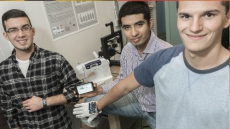
    Indian-Origin Researcher's Smart Textiles To Measure Illness

    Indian-Origin Researcher's Smart Textiles To Measure Illness
    Kunal Mankodiya, Director of the university's Wearable Biosensing Laboratory is researching how to transform gloves, socks, clothing and even shoes into high-tech items that will make people healthier -- and improve their lives.

    Indian-Origin Researcher's Smart Textiles To Measure Illness

    Universe Not Expanding At Accelerating Rate: Study

    Universe Not Expanding At Accelerating Rate: Study
    Challenging a standard cosmological concept, a team of researchers led by an Indian-origin scientist has found that the universe may not actually be expanding at an accelerating pace as was previously believed.

    Universe Not Expanding At Accelerating Rate: Study

    Expat Voting Ban Legit, Liberal Government Argues Despite Promised Change

    Expat Voting Ban Legit, Liberal Government Argues Despite Promised Change
    TORONTO — Allowing long-term Canadian expats to vote in federal elections is not a Constitutional requirement but a policy decision that Parliament has the right to make, the government plans to tell the country's top court.

    Expat Voting Ban Legit, Liberal Government Argues Despite Promised Change

    University Groups Try To Stave Off Offensive Costumes In Lead-up To Halloween

    TORONTO — Geishas are out. Feathered headdresses are forbidden. And if you're planning to wear a Bill Cosby or Caitlyn Jenner costume, you may not be welcome at your Halloween party of choice.

    University Groups Try To Stave Off Offensive Costumes In Lead-up To Halloween

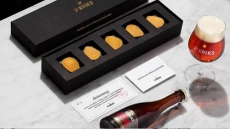
    World's Most Expensive Potato Chips Cost $11 A Piece, Come in Boxes of Five

    World's Most Expensive Potato Chips Cost $11 A Piece, Come in Boxes of Five
    In an attempt to create a special snack to go with their high quality beer, Sweetish brewery St. Erik's has created the world's most expensive potato chips.

    World's Most Expensive Potato Chips Cost $11 A Piece, Come in Boxes of Five

    Chinese Restaurant Adopts 'Pay What You Want' Policy, Loses $15,000 in a Week

    Chinese Restaurant Adopts 'Pay What You Want' Policy, Loses $15,000 in a Week
    A naive restaurant owner in Guiyang, China, who thought that appealing to people's inherent goodness would be a good way to attract customers to his new karst cave-themed restaurant, managed to lose over 100,000 RMB in just seven days.

    Chinese Restaurant Adopts 'Pay What You Want' Policy, Loses $15,000 in a Week