Friday, December 26, 2025
ADVT 
Interesting

Stone Age Humans Enjoyed Diverse Plant-based Menu

IANS, 07 Dec, 2016 11:28 AM
    Prehistoric ancestors ate a rich variety of plant-based foods during the Stone Age, say scientists who discovered a collection of 780,000-year-old edible plants in Israel.
     
    A tiny grape pip, left on the ground some 780,000 years ago, is one of more than 9,000 remains of edible plants discovered in an old Stone Age site in Israel, dating back to the Acheulian culture from 1.75-0.25 million years ago.
     
    The collection is the largest and most diverse in the Levantine corridor linking Africa and Eurasia, and provides rich testimony of the plant-based diet of our ancestors.
     
    While around the world remains of Paleolithic plants are scarce, this unique macro-botanical assemblage has allowed researchers from the Hebrew University of Jerusalem and Bar
    Ilan University in Israel to study the vegetable diet of humans from early-mid-Pleistocene.
     
    The findings were recovered during archeological excavations at the waterlogged site of Gesher Benot Ya'aqov, where the earliest evidence of human-controlled fire in western Asia was discovered in recent years.
     
    Researchers have long studied findings of hominid occupations in the Levantine Corridor, through which several hominin waves dispersed out of Africa.
     
    The discovery of the ancient macrobotanical remains for the first time indicate to the rich variety of plant assortments and subsistence opportunities that were available to the early humans on the transition from an African-based to a Eurasian diet.
     
    "In recent years we were met with a golden opportunity to reveal numerous remains of fruits, nuts and seeds from trees, shrubs and the lake, alongside the remains of animals and human-made stone tools in one locality," Naama Goren-Inbar at the Hebrew University of Jerusalem.
     
     
    Of the remains found on site, researchers have identified 55 species of edible plants, including seeds, fruits, nuts, leaves, stems, roots and tubers.
     
    The findings, many of them minor in size, have been preserved for hundreds of thousands of years thanks to the damp conditions in the vicinity of the site, said Melamed.
     
    "We found more than 10 species that existed here in prehistoric times but no longer today, such as two types of water nuts, from which seven were edible," said Yoel Melamed of the Bar Ilan University.
     
    The site was submerged under the Jordan River and the Hula Lake in conditions of humidity and lack of oxygen, aided by the fast covering of layers of sediments, in which researchers also found stone tools and animal fossils.
     
    Gesher Benot Ya'aqov is also the place where researchers found the earliest evidence of the use of fire in Eurasia. "The use of fire is very important because a lot of the plants are toxic or inedible," said Goren-Inbar.
     
    "Using fire, like roasting nuts and roots for example, allows the use of various parts of the plant and increases the diversity of the plant component of the Acheulian diet, alongside aquatic and terrestrial fauna," he said.
    MORE Interesting ARTICLES

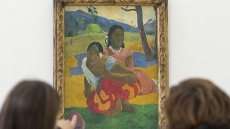
    French Artist Gauguin's Painting Breaks Sale Record At $300 Million

    French Artist Gauguin's Painting Breaks Sale Record At $300 Million
    A painting of two Tahitian girls by French artist Gauguin has been sold for $300 million, making it the most expensive work of art ever sold.

    French Artist Gauguin's Painting Breaks Sale Record At $300 Million

    Indian-origin Bank Worker Satnam Kaur, Who Stole 120,000 Pounds Ordered To Pay Back Just ONE Pound

    Indian-origin Bank Worker Satnam Kaur, Who Stole 120,000 Pounds Ordered To Pay Back Just ONE Pound
    A Scotland court has ordered an Indian-origin former bank worker, who stole 120,000 pounds (about $181,000) from a client, to pay back just one pound because she has no assets, media reported.

    Indian-origin Bank Worker Satnam Kaur, Who Stole 120,000 Pounds Ordered To Pay Back Just ONE Pound

    Humans Of New York Photo Blogger Helps Raise $1 Million To Send Poor NYC Kids To Visit Harvard

    Humans Of New York Photo Blogger Helps Raise $1 Million To Send Poor NYC Kids To Visit Harvard
    NEW YORK — A fundraising campaign inspired by the popular photo blog Humans of New York has raised more than $1 million to send middle-school students from a high-poverty Brooklyn school on field trips to Harvard.

    Humans Of New York Photo Blogger Helps Raise $1 Million To Send Poor NYC Kids To Visit Harvard

    Architects Create Cubitat That Turns Any Space Into An Apartment

    Architects Create Cubitat That Turns Any Space Into An Apartment
    Ever imagined your apartment being squeezed into a small box? This may become eminently possible, as architects have created a cube that can turn into a whole apartment, complete with a bed, kitchen and bathroom.

    Architects Create Cubitat That Turns Any Space Into An Apartment

    Is Mumtaz Mahal's Body Mummified In Taj Mahal?

    Is Mumtaz Mahal's Body Mummified In Taj Mahal?
    Mughal emperor Shah Jahan built the 17th century Taj Mahal here in memory of his beloved wife Mumtaz who died while giving birth to their 14th child in Burhanpur, a town in what is now Maharashtra.

    Is Mumtaz Mahal's Body Mummified In Taj Mahal?

    No-Tip Restaurant In Philadelphia Offers Food For Thought On Hourly Wages, Benefits For Employees

    No-Tip Restaurant In Philadelphia Offers Food For Thought On Hourly Wages, Benefits For Employees
    PHILADELPHIA — Customers to Girard Brasserie and Bruncherie might be in for a surprise when they read the note attached to their bills: "Tipping is not necessary."

    No-Tip Restaurant In Philadelphia Offers Food For Thought On Hourly Wages, Benefits For Employees