Saturday, July 4, 2026
ADVT 
Interesting

Taking Shower Too Often Can Affect Your Immune System

Darpan News Desk IANS, 03 Feb, 2017 01:28 PM
  • Taking Shower Too Often Can Affect Your Immune System
If you think that taking shower everyday can keep you healthy and hygienic then give it a second thought, as a study reveals that over-cleaning can damage the human microbiome, thereby affecting the immune system, digestion and even heart.
 
Not bathing for a few days can leave you a bit smelly, but showering too often can actually do more harm than good, reports the Independent.
 
According to researchers from the Genetic Science Centre at the University of Utah, over-cleaning can damage the human microbiome - a collection of bacteria, viruses and other microbes that live in and on your body.
 
These are essential to our health and disrupting the microbial ecosystems can cause disease.
 
As a result, your immune system, digestions and even your heart could suffer.
 
The study of the Yanomami village in the Amazon revealed that people who lived there had a far richer community of microbes in their skin and "the highest diversity of bacteria and genetic functions ever reported in a human group."
 
While the research concluded that shampoo-scrubbed lifestyles significantly affects the human microbiome diversity but what it could not tell us was how often we should actually be showering.
 
While the thought of giving up showering completely doesn't sound too appealing, some people have given it a go.
 
Take James Hamblin, senior editor of 'The Atlantic', recorded his journey towards kicking cleaning all together.
 
"At first, I was an oily, smelly beast," Hamblin wrote, but it wasn't long before his body started to adjust.
 
"After a while... your ecosystem reaches a steady state and you stop smelling bad. I mean, you don't smell like rosewater or Axe Body Spray, but you don't smell like B.O., either," Hamblin explained.

MORE Interesting ARTICLES

Bikini Round Now Removed From Miss World Pageant

Bikini Round Now Removed From Miss World Pageant
The Miss World contest, which has been an annual feature since 1951, will no longer feature a swimsuit round in their competition, the organisation's chairwoman Julia Morley has said.

Bikini Round Now Removed From Miss World Pageant

Calorie Labels For Alcoholic Drinks Will Be On The Menu - But Not At The Bar

Calorie Labels For Alcoholic Drinks Will Be On The Menu - But Not At The Bar
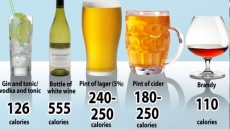
WASHINGTON — Don't want to be confronted with the number of calories in that margarita or craft beer? Then avoid the menu and order at the bar.

Calorie Labels For Alcoholic Drinks Will Be On The Menu - But Not At The Bar

Microbial 'signatures' can nab sexual offenders

Microbial 'signatures' can nab sexual offenders
Bacterial communities living on an individual's pubic hairs could be used as a microbial "signature" to trace his involvement in sexual assault cases, say Australian researchers....

Microbial 'signatures' can nab sexual offenders

Know how cows communicate with their calves

Know how cows communicate with their calves
Cows use individualised calls to communicate with each other, a study that identified particular types of mother-offspring contact calls in cattle has showed....

Know how cows communicate with their calves

The Cult Of Culture: Merriam-webster Names 'Culture' Its 2014 Word Of The Year

The Cult Of Culture: Merriam-webster Names 'Culture' Its 2014 Word Of The Year
NEW YORK — A nation, a workplace, an ethnicity, a passion, an outsized personality. The people who comprise these things, who fawn or rail against them, are behind Merriam-Webster's 2014 word of the year: culture.

The Cult Of Culture: Merriam-webster Names 'Culture' Its 2014 Word Of The Year

Unhealthy environment tunes kids' genes for anti-social behaviour

Unhealthy environment tunes kids' genes for anti-social behaviour
Exposure to family conflict or sexual abuse could affect expression of certain genes and make your kids prone to delinquent behaviour, a new research has found...

Unhealthy environment tunes kids' genes for anti-social behaviour