Thursday, December 18, 2025
ADVT 
Interesting

These 'Intelligent' Diaper Can Send SMS When Soiled

Darpan News Desk The Canadian Press, 17 Aug, 2015 12:16 PM
    For elderly and bedridden patients, diapers could soon come with a sensor that alerts caregivers by SMS when they are soiled.
     
    Researchers from Singapore have developed an "intelligent continence management system" comprising a thin disposable sensor strip, a compact wireless transmitter, a receiver and software.
     
    "Lying in soiled diapers for prolonged periods is not only uncomfortable and unhygienic, but may also cause skin rashes and infection for the wearer,” said lead researcher Jackie Ying, executive director, Institute of Bioengineering and Nanotechnology (IBN) at The Agency for Science, Technology and Research in Singapore (A*STAR).
     
    "While increasing the frequency of diaper checks and changes may help to reduce this problem, it would also add to the workload of caregivers. Clearly, there is a need for an alternative solution," Ying explained in a statement released by A*STAR.
     
    The new sensor can be easily integrated into the adult diapers currently available in the market to facilitate timely diaper change. 
     
    It comes in the form of a thin, lightweight strip of metal, plastic and paper. This inexpensive strip can be embedded in the diaper and can be disposed easily after use. 
     
    The wireless transmitter, which is connected to the sensor, can be easily attached and removed for reuse.
     
    IBN's system tracks the wetness level in the diaper via the sensor. 
     
    Once the diaper wetness reaches a predetermined level, the sensor will transmit a signal wirelessly to the caregivers using their preferred interface such as SMS. 
     
    This will prompt the caregiver to change the patient's diaper when needed.
     
    Timely replacement of soiled diapers is a challenge for caregivers of patients who are unable to communicate this need, such as those who suffer from aphasia, the loss of speech after a stroke or brain injury.

    MORE Interesting ARTICLES

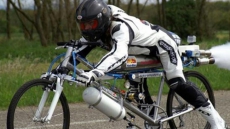
    New world record set with 333 km/hour bicycle ride

    New world record set with 333 km/hour bicycle ride
    French daredevil Francois Gissy set a new world record for the highest speed attained while riding a bicycle - reaching a gut churning speed of 333 km/hour in 4.8 seconds....

    New world record set with 333 km/hour bicycle ride

    'Love hormone' shoo away fear

    'Love hormone' shoo away fear
    “Under Oxytocin's influence, the expectation of recurrent fear subsequently abates to a greater extent,” explained Rene Hurlemann from....

    'Love hormone' shoo away fear

    How late developers can change their destiny

    How late developers can change their destiny
    My teachers always told my parents: "Er, he's probably a late developer." Years later, I'm beginning to ask how late is late, exactly? This side of the after-life?

    How late developers can change their destiny

    What Did Ancient Romans Eat? Varied Diet Found From Pompeii Latrines, Sewers

    What Did Ancient Romans Eat? Varied Diet Found From Pompeii Latrines, Sewers
    ROME — Archaeologists picking through latrines, sewers, cesspits and trash dumps at Pompeii and Herculaneum have found tantalizing clues to an apparently varied diet there before the eruption of Mount Vesuvius destroyed those Roman cities in 79 A.D.

    What Did Ancient Romans Eat? Varied Diet Found From Pompeii Latrines, Sewers

    Manhattan Chef Aiming For Guinness Gingerbread House World Record: 1020 Sugary Homes

    Manhattan Chef Aiming For Guinness Gingerbread House World Record: 1020 Sugary Homes
    NEW YORK — Special materials are going into the most colorful New York real estate development: 3,550 pounds of royal icing, 700 pounds of candy and 600 pounds of dough.

    Manhattan Chef Aiming For Guinness Gingerbread House World Record: 1020 Sugary Homes

    Find self-compassion through virtual reality

    Find self-compassion through virtual reality
    Researchers from the University College London (UCL) found an innovative approach that reduces self-criticism and increases self-compassion and...

    Find self-compassion through virtual reality