Sunday, December 28, 2025
ADVT 
Interesting

Your Sweat May Be More Secure Password To Your Smartphone!

The Canadian Press, 14 Nov, 2017 11:47 AM
    A new biometric-based authentication approach that uses your body sweat may securely help you unlock your smartphone and other wearable devices, scientists say.
     
     
    The new approach proposed by researchers at University at Albany in the US relies on analysing skin secretions - or sweat - to build an amino acid profile that is unique to the devices' owner.
     
     
    The profile would be stored within the device and used for identification purposes each time an attempt to unlock is made, researchers said.
     
     
    "We are developing a new form of security that could completely change the authentication process for electronic devices," said Jan Halamek, an assistant professor at the University at Albany.
     
     
    "Using sweat as an identifier cannot be easily mimicked/hacked by potential intruders. It is close to full- proof," Halamek said.
     
     
    Skin secretions contain many small molecules - or metabolites - that can each be targeted for authentication analysis.
     
     
    To build a profile, the device would first have a "monitoring period" in which it would continuously measure its owner's sweat levels at various times of the day.
     
     
    Once the profile is developed, the owner would be identified once holding the device/wearing it.
     
     
    The approach would not only improve on current authentication methods, but also help people with certain disabilities, who may be unable to move their fingers in a specific position to open the device or have a caretaker who is unlocking the device without permission.
     
     
    The device owner would also not have to remember a passcode, researchers said.
     
     
    "The current forms of authentication have proven to be less than ideal," said Halamek, who led the study published in the journal ChemPhysChem.
     
     
    "Passwords and pins can easily be seen over someone's shoulder and there are many internet tutorials on how to create a fingerprint mold that is capable of opening a device. There is also issues with facial recognition, which often times does not work correctly," said Halamek.
     
     
    Halamek has tested the analysis in his lab with success.
     
     
    The next step is to collaborate with engineers who can help with implementation. 

    MORE Interesting ARTICLES

    Universe Not Expanding At Accelerating Rate: Study

    Universe Not Expanding At Accelerating Rate: Study
    Challenging a standard cosmological concept, a team of researchers led by an Indian-origin scientist has found that the universe may not actually be expanding at an accelerating pace as was previously believed.

    Universe Not Expanding At Accelerating Rate: Study

    Expat Voting Ban Legit, Liberal Government Argues Despite Promised Change

    Expat Voting Ban Legit, Liberal Government Argues Despite Promised Change
    TORONTO — Allowing long-term Canadian expats to vote in federal elections is not a Constitutional requirement but a policy decision that Parliament has the right to make, the government plans to tell the country's top court.

    Expat Voting Ban Legit, Liberal Government Argues Despite Promised Change

    University Groups Try To Stave Off Offensive Costumes In Lead-up To Halloween

    TORONTO — Geishas are out. Feathered headdresses are forbidden. And if you're planning to wear a Bill Cosby or Caitlyn Jenner costume, you may not be welcome at your Halloween party of choice.

    University Groups Try To Stave Off Offensive Costumes In Lead-up To Halloween

    World's Most Expensive Potato Chips Cost $11 A Piece, Come in Boxes of Five

    World's Most Expensive Potato Chips Cost $11 A Piece, Come in Boxes of Five
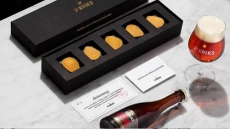
    In an attempt to create a special snack to go with their high quality beer, Sweetish brewery St. Erik's has created the world's most expensive potato chips.

    World's Most Expensive Potato Chips Cost $11 A Piece, Come in Boxes of Five

    Chinese Restaurant Adopts 'Pay What You Want' Policy, Loses $15,000 in a Week

    Chinese Restaurant Adopts 'Pay What You Want' Policy, Loses $15,000 in a Week
    A naive restaurant owner in Guiyang, China, who thought that appealing to people's inherent goodness would be a good way to attract customers to his new karst cave-themed restaurant, managed to lose over 100,000 RMB in just seven days.

    Chinese Restaurant Adopts 'Pay What You Want' Policy, Loses $15,000 in a Week

    World's Most Exclusive Social Network Charges Rich Snobs $1,000 a Month

    World's Most Exclusive Social Network Charges Rich Snobs $1,000 a Month
    Snobby rich kids sick of sharing the social media space with plebs can now sign up for the "world's most exclusive social network". It's even named after them and only costs $1,000 a month. What's not to like, right?

    World's Most Exclusive Social Network Charges Rich Snobs $1,000 a Month