Wednesday, December 31, 2025
ADVT 
Interesting

Your Sweat May Be More Secure Password To Your Smartphone!

The Canadian Press, 14 Nov, 2017 11:47 AM
    A new biometric-based authentication approach that uses your body sweat may securely help you unlock your smartphone and other wearable devices, scientists say.
     
     
    The new approach proposed by researchers at University at Albany in the US relies on analysing skin secretions - or sweat - to build an amino acid profile that is unique to the devices' owner.
     
     
    The profile would be stored within the device and used for identification purposes each time an attempt to unlock is made, researchers said.
     
     
    "We are developing a new form of security that could completely change the authentication process for electronic devices," said Jan Halamek, an assistant professor at the University at Albany.
     
     
    "Using sweat as an identifier cannot be easily mimicked/hacked by potential intruders. It is close to full- proof," Halamek said.
     
     
    Skin secretions contain many small molecules - or metabolites - that can each be targeted for authentication analysis.
     
     
    To build a profile, the device would first have a "monitoring period" in which it would continuously measure its owner's sweat levels at various times of the day.
     
     
    Once the profile is developed, the owner would be identified once holding the device/wearing it.
     
     
    The approach would not only improve on current authentication methods, but also help people with certain disabilities, who may be unable to move their fingers in a specific position to open the device or have a caretaker who is unlocking the device without permission.
     
     
    The device owner would also not have to remember a passcode, researchers said.
     
     
    "The current forms of authentication have proven to be less than ideal," said Halamek, who led the study published in the journal ChemPhysChem.
     
     
    "Passwords and pins can easily be seen over someone's shoulder and there are many internet tutorials on how to create a fingerprint mold that is capable of opening a device. There is also issues with facial recognition, which often times does not work correctly," said Halamek.
     
     
    Halamek has tested the analysis in his lab with success.
     
     
    The next step is to collaborate with engineers who can help with implementation. 

    MORE Interesting ARTICLES

    Team USA's Silver Medal Winning Archer Looks Almost Exactly Like Leonardo Di Caprio

    Team USA's Silver Medal Winning Archer Looks Almost Exactly Like Leonardo Di Caprio
    American archer Brady Ellison is a three-time Olympian and, as of Saturday, a two-time silver medalist, taking home a second-place win in this year’s team event. 

    Team USA's Silver Medal Winning Archer Looks Almost Exactly Like Leonardo Di Caprio

    Brazilian Rugby Player Says 'Yes' To Surprise Marriage Proposal From Her Girlfriend

    Brazilian Rugby Player Says 'Yes' To Surprise Marriage Proposal From Her Girlfriend
    Isadora Cerullo, 25, was a member of the Brazil squad that narrowly missed out on reaching the knockout rounds.

    Brazilian Rugby Player Says 'Yes' To Surprise Marriage Proposal From Her Girlfriend

    Pakistan Lawmaker Demands Ban Of Hindi Doraemon Cartoons

    Pakistan Lawmaker Demands Ban Of Hindi Doraemon Cartoons
    Doraemon is a small, blue robot cat from the future sent back in time to help a hapless schoolboy and his family.

    Pakistan Lawmaker Demands Ban Of Hindi Doraemon Cartoons

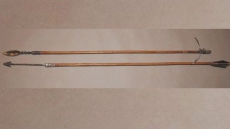
    RCMP Help Once Poison-Tipped Arrows From Africa Find Their Way To B.C. Museum

    RCMP Help Once Poison-Tipped Arrows From Africa Find Their Way To B.C. Museum
    Cpl. Richard De Jong says the arrows, which are about 70 centimetres long, are from the Maasai tribes of Kenya and were designed to carry poison.

    RCMP Help Once Poison-Tipped Arrows From Africa Find Their Way To B.C. Museum

    Waterloo, Ont., Startup Aims To Take Medical Marijuana Growing High-Tech

    Waterloo, Ont., Startup Aims To Take Medical Marijuana Growing High-Tech
    TORONTO — A startup based in Waterloo, Ont., is looking to take cannabis cultivation high-tech, but the success of the mobile app-controlled system may hinge on whether new regulations will allow Canadians to grow medical marijuana at home.

    Waterloo, Ont., Startup Aims To Take Medical Marijuana Growing High-Tech

    Man Arrested After Running Onto Madrid Tarmac To Catch Plane

    Man Arrested After Running Onto Madrid Tarmac To Catch Plane
    Incredible moment Ryanair passenger jumped off boarding bridge and ran across tarmac to flag down his plane - before it stopped to let him get on 

    Man Arrested After Running Onto Madrid Tarmac To Catch Plane