Thursday, July 9, 2026
ADVT 
Interesting

Your Sweat May Be More Secure Password To Your Smartphone!

The Canadian Press, 14 Nov, 2017 11:47 AM
    A new biometric-based authentication approach that uses your body sweat may securely help you unlock your smartphone and other wearable devices, scientists say.
     
     
    The new approach proposed by researchers at University at Albany in the US relies on analysing skin secretions - or sweat - to build an amino acid profile that is unique to the devices' owner.
     
     
    The profile would be stored within the device and used for identification purposes each time an attempt to unlock is made, researchers said.
     
     
    "We are developing a new form of security that could completely change the authentication process for electronic devices," said Jan Halamek, an assistant professor at the University at Albany.
     
     
    "Using sweat as an identifier cannot be easily mimicked/hacked by potential intruders. It is close to full- proof," Halamek said.
     
     
    Skin secretions contain many small molecules - or metabolites - that can each be targeted for authentication analysis.
     
     
    To build a profile, the device would first have a "monitoring period" in which it would continuously measure its owner's sweat levels at various times of the day.
     
     
    Once the profile is developed, the owner would be identified once holding the device/wearing it.
     
     
    The approach would not only improve on current authentication methods, but also help people with certain disabilities, who may be unable to move their fingers in a specific position to open the device or have a caretaker who is unlocking the device without permission.
     
     
    The device owner would also not have to remember a passcode, researchers said.
     
     
    "The current forms of authentication have proven to be less than ideal," said Halamek, who led the study published in the journal ChemPhysChem.
     
     
    "Passwords and pins can easily be seen over someone's shoulder and there are many internet tutorials on how to create a fingerprint mold that is capable of opening a device. There is also issues with facial recognition, which often times does not work correctly," said Halamek.
     
     
    Halamek has tested the analysis in his lab with success.
     
     
    The next step is to collaborate with engineers who can help with implementation. 
    MORE Interesting ARTICLES

    'Quarter Of Fresh Harvard Graduates Claims 10 Sex Partners'

    If we believe a latest Harvard University survey, 26 percent of students have had 10 or more sexual partners but 21 percent of senior students rate themselves still virgin.

    'Quarter Of Fresh Harvard Graduates Claims 10 Sex Partners'

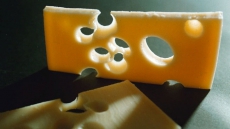
    Mystery Of Disappearing Holes In Swiss Cheese Solved: The Milk's Too Clean!

    Mystery Of Disappearing Holes In Swiss Cheese Solved: The Milk's Too Clean!
    BERLIN — The mystery of Swiss cheese and its disappearing holes has been solved: The milk's too clean.

    Mystery Of Disappearing Holes In Swiss Cheese Solved: The Milk's Too Clean!

    Women Want More Sex As They Grow Older

    Women Want More Sex As They Grow Older
    A latest survey looking into women's sexual health has debunked the theory that women are not interested in sex as they get older.

    Women Want More Sex As They Grow Older

    India's Gagan Toor Suggests Winning Name For Mercury Crater To NASA

    India's Gagan Toor Suggests Winning Name For Mercury Crater To NASA
    Enheduanna, the name suggested by Gagan Toor of India, is one of the winners of a contest to name five new craters on the planet Mercury.

    India's Gagan Toor Suggests Winning Name For Mercury Crater To NASA

    'Dino-Chickens' : Indian-origin Researcher 'Grows' Dinosaur Snout In A Chicken In Lab

    'Dino-Chickens' : Indian-origin Researcher 'Grows' Dinosaur Snout In A Chicken In Lab
    In a first, a team led by an Indian-origin researcher has successfully replicated the molecular processes that led from dinosaur snouts to the first bird beaks -- by 'growing' the snout that replaced a chicken's beak in the lab.

    'Dino-Chickens' : Indian-origin Researcher 'Grows' Dinosaur Snout In A Chicken In Lab

    'Yoga Helps Make Life A Pleasant Experience'

    'Yoga Helps Make Life A Pleasant Experience'
    In another curtain-raiser event ahead to the first International Day of Yoga on June 21, Sadhguru Jaggi Vasudev, an Indian mystic and humanitarian, stressed the relevance of yoga in today's world saying it helps make life a pleasant experience.

    'Yoga Helps Make Life A Pleasant Experience'