A resolution with bipartisan support was introduced by United States senators on Wednesday to recognize the U.S.-Canada partnership as the relationship continues to be badly strained by President Donald Trump's tariffs and threats of annexation.
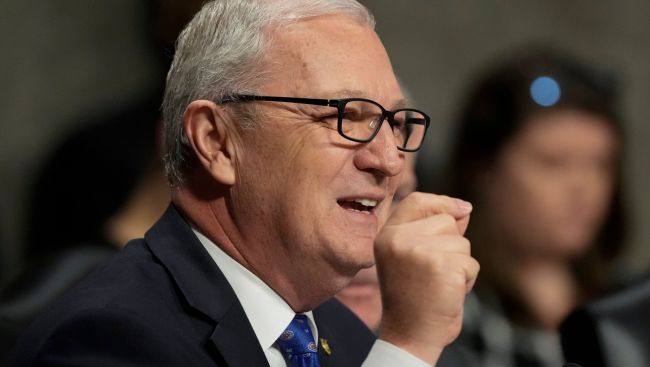
Republican Sen. Kevin Cramer of North Dakota and Independent Sen. Angus King of Maine introduced the symbolic resolution with support from eight other lawmakers on both sides of the aisle.
"Representing a Northern border state, I recognize the importance of the unique partnership between the United States and Canada,” Cramer said in a news release. "Not only are our neighbours to the north crucial economic and national security partners, but they are literally our closest ally."
Canada was an early target of Trump's taunts and tariff threats following his November election win last year.
He repeatedly called then-prime minister Justin Trudeau a "governor" and has continued to insist he wants to make Canada a U.S. state. His complaints have ranged from defence spending to trade deficits, and he labelled the international border "artificial."
Trump hit Canada with economywide tariffs in March, before partially walking back the duties a few days later for imports compliant with the Canada-U.S.-Mexico Agreement on trade. Trump linked those duties to the flow of fentanyl but U.S. government data shows an extremely small volume of the deadly drug is seized at the northern border.
Canada is also impacted by tariffs on steel, aluminum and automobiles.
King said he knows "that the current situation presents many unfortunate challenges."
"While I am excited to reintroduce this resolution to reaffirm our two nations' commitment to one another, we must acknowledge the close ties between our countries to resolve and mitigate any potential disruptions to our intertwined interests," King said in the news release.
The resolution recognizes the relationship between the United States and Canada is critical to promoting peace and expanding global economic opportunities, the news release said.
It also emphasizes shared defence and security commitments, like the North American Aerospace Defence Command, or Norad. The news release pointed to joint border security initiatives and "co-operation in combatting transnational threats such as illegal migration and fentanyl trafficking."
A similar resolution was introduced in the House of Representatives by Mark Amodei, a Republican congressman from Nevada, earlier this year.
Cramer and King are co-chairs of the American Canadian Economy and Security Caucus. The news release said the United States and Canada share three oceans and the world’s longest border — where about 400,00 people and more than $2.5 billion worth of goods cross each day.
The number of Canadians travelling across the land borders into the United States has dramatically decreased as Trump's rhetoric against Canada heightened.
Preliminary data from Statistics Canada said the number of Canadians returning from the United States by vehicle dropped by 35 per cent in April compared to the same month in 2024.
U.S. media has reported that leaders of tourism agencies are expressing concern about the significant drop in Canadian travellers, particularly in border states.
The Grand Forks Herald reported that the Fargo-Moorhead Visitors Bureau sent an email to its membership saying "we’ve clearly reached a point where the strained U.S.-Canada relationship is taking its toll on retail sales in northern-tier communities like ours."
Democratic Sen. Jeanne Shaheen from New Hampshire told a Senate Small Business Committee hearing Wednesday that the frayed relationship with Canada, as well as Trump's tariffs, are having a significant impact.
She told the hearing about a bakery in her state that opened more than 25 years ago and used to do about 85 per cent of its business with Canada.
"They used to have 25 employees. Now they have two," she said. "Because the president's tariffs have put them out of business."
Picture Courtesy: AP Photo/Ben Curtis