Monday, June 29, 2026
ADVT 
International

Google Won't Deploy Artificial Intelligence To Build Military Weapons: Sundar Pichai

IANS, 08 Jun, 2018 12:52 PM
    After facing backlash over its involvement in an Artificial Intelligence (AI)-powered Pentagon project "Maven", Google CEO Sundar Pichai has enphasised that the company will not work on technologies that cause or are likely to cause overall harm.
     
     
    About 4,000 Google employees had signed a petition demanding "a clear policy stating that neither Google nor its contractors will ever build warfare technology".
     
     
    Following the anger, Google decided not to renew the "Maven" AI project with the US Defence Department after it expires in 2019.
     
     
    "We will not design or deploy AI in weapons or other technologies whose principal purpose or implementation is to cause or directly facilitate injury to people," Pichai said in a blog post late Thursday.
     
     
    "We will not pursue AI in "technologies that gather or use information for surveillance violating internationally accepted norms," the Indian-born CEO added.
     
     
    "We want to be clear that while we are not developing AI for use in weapons, we will continue our work with governments and the military in many other areas like cybersecurity, training, military recruitment, veterans' healthcare, and search and rescue," Pichai noted.


    Google will incorporate its privacy principles in the development and use of its AI technologies, providing appropriate transparency and control over the use of data, Pichai enphasised.
     
     
    In a blog post describing seven "AI principles", he said these are not theoretical concepts but "concrete standards that will actively govern our research and product development and will impact our business decisions".
     
     
    "How AI is developed and used will have a significant impact on society for many years to come. As a leader in AI, we feel a deep responsibility to get this right," Pichai posted.
     
     
    Google will strive to make high-quality and accurate information readily available using AI, while continuing to respect cultural, social, and legal norms in the countries where it operates.
     
     
    "We will seek to avoid unjust impacts on people, particularly those related to sensitive characteristics such as race, ethnicity, gender, nationality, income, sexual orientation, ability, and political or religious belief," Pichai noted.
     
     
    Pichai said Google will design AI systems to be appropriately cautious, and seek to develop them in accordance with best practices in AI safety research.
     
     
    "We will design AI systems that provide appropriate opportunities for feedback, relevant explanations, and appeal. Our AI technologies will be subject to appropriate human direction and control," he added.

    MORE International ARTICLES

    Bobby Jindal Fails To Make The Cut For First Debate

    Bobby Jindal failed to make the cut for Fox News' prime-time first Republican presidential debate on Thursday with celebrity real estate mogul leading the ten top polling candidates.

    Bobby Jindal Fails To Make The Cut For First Debate

    Canadian-Born Arnold Scassi, Designer To Stars And Presidential Wives, Dead At 85

    Canadian-Born Arnold Scassi, Designer To Stars And Presidential Wives, Dead At 85
    NEW YORK — Canadian designer Arnold Scaasi, whose flamboyant creations adorned the likes of Laura Bush, Elizabeth Taylor and Barbra Streisand, has died. The Montreal-born designer was 85.

    Canadian-Born Arnold Scassi, Designer To Stars And Presidential Wives, Dead At 85

    That Old Daredevil 'Joey' Biden Weighs Ultimate Crazy Challenge: White House Run

    WASHINGTON — The daredevil feats of little Joey Biden left the other neighbourhood kids in droopy-jawed disbelief.

    That Old Daredevil 'Joey' Biden Weighs Ultimate Crazy Challenge: White House Run

    Indian-Origin Scientists Develop New Super-Thin Material

    Indian-Origin Scientists Develop New Super-Thin Material
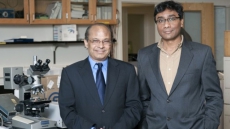
    Indian-origin scientists Swastik Kar and Srinivas Sridhar have developed a new super-thin light-weight material with potential applications in a range of tools that we use everyday -- from cameras to computers, says a new study.

    Indian-Origin Scientists Develop New Super-Thin Material

    Amasia Patel, Indian-Origin Girl And Friend Missing In Britain

    Amasia Patel, Indian-Origin Girl And Friend Missing In Britain
    Two minor girls, including an Indian-origin teenager, were reported missing from their homes in Britain, police said on Tuesday.Amasia Patel, Indian-Origin Girl And Friend Missing In Britain

    Amasia Patel, Indian-Origin Girl And Friend Missing In Britain

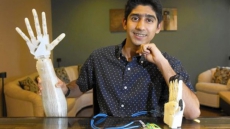
    Indian-Origin Teen Nilay Mehta Creates Low-Cost Robotic Arm In US

    Indian-Origin Teen Nilay Mehta Creates Low-Cost Robotic Arm In US
    17-year-old Indian-origin teenager has won accolades for an inexpensive robotic arm he created for his school science fair project in California state of the US.

    Indian-Origin Teen Nilay Mehta Creates Low-Cost Robotic Arm In US