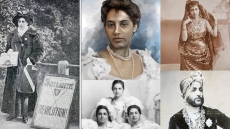
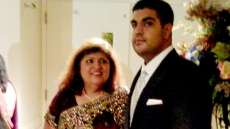
Indian doctors in the UK who have worked for decades in Britain’s National Health Service were on Thursday hailed for their contribution and building up the country’s healthcare system.
Britain’s Royal College of General Practitioners (RCGP) launched a new exhibition to pay tribute to the Indian doctors who were the very “lifeblood” of the National Health Service (NHS) and were amongst its “architects”.
‘Migrants Who Made the NHS’ is a celebration of thousands of doctors who came from South Asia to keep the UK’s state-funded NHS afloat by working as general practitioners in some of the most deprived and far-flung areas of the country between the 1940s and 1980s.
“General practice in the UK would not be what it is today without the hard work, innovation, and courage of our predecessors, and their dedication to delivering high-quality patient care. Indeed, without them, our profession and the NHS might not even exist at all,” said Professor Mayur Lakhani, President of the RCGP.
“Not only were they doctors, but they became highly-valued members of the communities in which they practised. Whilst many faced incredible challenges, our exhibition also documents the overwhelmingly positive and lifelong relationships they forged with their patients,” he said.
The exhibition, at the headquarters of the college in central London, marks the 70th anniversary year of the NHS and comes at a time when there is growing debate around its future staffing and funding needs.
Based on the book ‘Migrant architects of the NHS: South Asian doctors and the reinvention of British general practice (1940s-1980s)’ by Dr Julian M Simpson, the new exhibition draws on archival research, photographs and oral history interviews with 40 general practitioners who moved to Britain from South Asia during that period, including some who are still practising today.

“It’s important to also remember that the National Health Service was established to make healthcare accessible to those who could not afford it. And for millions of people, particularly in working-class communities across Britain, accessing that care meant going to see a GP from the Indian subcontinent,” said Simpson.
“Doctors from the Indian sub-continent were therefore not just contributing to the NHS, they were its very lifeblood. We should acknowledge they were amongst the architects of the NHS,” he notes.
By the 1980s, around 16 per cent of general practitioners working in the NHS had been born in India, Pakistan, Bangladesh or Sri Lanka. They were responsible for delivering patient care to around a sixth of the British population. In some areas they made up more than half of the general practitioners population.
“The NHS evolved during its first four decades into a system based around general practice and primary care. By becoming family doctors, South Asian doctors prevented a general practitioners recruitment crisis. Through their work, they shaped the field as it transformed itself into the cornerstone of the British healthcare system,” Simpson explains.
The new exhibition is aimed at demonstrating how doctors from the Indian sub-continent kept the family doctor service thriving in the UK, particularly for patients in working-class and inner-city areas. The South Asian doctors filled the void largely created by UK doctors choosing to work overseas, and before general practice gained belated recognition as a medical specialty on par with hospital medicine.
Britain was a popular choice for South Asian doctors to practise medicine during the 1940s-80s, given the well-established links built during the British Empire. Medical training in the Indian subcontinent remained heavily under British influence after independence.
The lack of UK-trained doctors wanting to work as general practitioners meant that it was an area of medicine where South Asian doctors could build good careers, the RCGP notes.

This was particularly the case in poor, industrial areas where patient demand was high but general practitioners recruitment was difficult, and as a result, the presence of overseas general practitioners became very concentrated.
There was also a wider impact and influence of migration from the Indian subcontinent on British medicine. There are today 1,724 doctors with the common Indian surname Patel on the General Medical Council’s (GMC) list of registered medical practitioners, only slightly fewer than doctors with the common British surname of Smith (1,750).
South Asian doctors often faced discrimination, racial and sexual, when applying for jobs and the exhibition also looks at the adversity they came up against.
The Royal College of General Practitioners is Britain’s professional membership body with a network of more than 52,000 family doctors.