Sunday, June 21, 2026
ADVT 
International

Indian-Origin Scientists Develop New Super-Thin Material

IANS, 04 Aug, 2015 12:10 PM
    Indian-origin scientists Swastik Kar and Srinivas Sridhar have developed a new super-thin light-weight material with potential applications in a range of tools that we use everyday -- from cameras to computers, says a new study.
     
    The new material spun out of boron, nitrogen, carbon, and oxygen shows evidence of magnetic, optical, and electrical properties as well as thermal sensitivity. 
     
    Its potential applications run the gamut: from 20-megapixel arrays for cellphone cameras to photo detectors to atomically thin transistors that when multiplied by the billions could fuel computers, the study said.
     
    The researchers from Northwestern University in Illinois, US found the material while working for a four-year project funded by the US Army Research Laboratory and Defense Advanced Research Projects Agency.
     
    They were charged with imbuing graphene with thermal sensitivity for use in infrared imaging devices such as night-vision goggles for the military.
     
    Kar and Sridhar spent a lot of time trying to get rid of oxygen seeping into their brew, worried that it would contaminate the “pure” material they were seeking to develop.
     
    "ThatÂ’s where the Aha! moment happened for us,” said Kar, assistant professor of physics in the College of Science. 
     
    "We realised we could not ignore the role that oxygen plays in the way these elements mix together,” Kar, an alumnus of Indian Institute of Science, Bangalore, noted.
     
    "So instead of trying to remove oxygen, we thought: Let’s control its introduction,” Sridhar, professor of physics and director of Northeastern’s Electronic Materials Research Institute, said.
     
    Oxygen, it turned out, was behaving in the reaction chamber in a way the scientists had never anticipated: It was determining how the other elements -- boron, carbon, and nitrogen -- combined in a solid, crystal form, while also inserting itself into the lattice. 
     
    They named the new material 2D-BNCO, representing the four elements in the mix and the two-dimensionality of the super-thin lightweight material, and set about characterising and manufacturing it, to ensure it was both reproducible and scalable. 
     
    The findings appeared in the journal Science Advances.
    MORE International ARTICLES

    North Korea defends racist slurs against Obama

    North Korea defends racist slurs against Obama
    North Korea Monday defended recent racist slurs, including "evil black monkey", fired off at US President Barack Obama through its state media.

    North Korea defends racist slurs against Obama

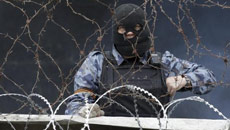
    EU broadens sanctions for Ukraine crisis

    EU broadens sanctions for Ukraine crisis
    The European Union (EU) Monday added 13 people to the list of those subject to targeted sanctions for alleged actions "undermining Ukraine's territorial integrity, sovereignty and independence".

    EU broadens sanctions for Ukraine crisis

    Ukraine crisis: Russia warns Europe of gas supply risk

    Ukraine crisis: Russia warns Europe of gas supply risk
    The ongoing Russia-Ukraine stand-off may jeopardise natural gas supplies to the European countries despite Moscow's efforts to abide by contracts, a senior official said Monday.

    Ukraine crisis: Russia warns Europe of gas supply risk

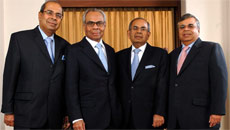
    India-born Hinduja brothers emerge richest in Britain

    India-born Hinduja brothers emerge richest in Britain
    India-born Hinduja brothers, Srichand and Gopichand Hinduja, have emerged as the richest men in Britain with a net wealth of 11.9 billion pounds (about $20 billion), according to a report.

    India-born Hinduja brothers emerge richest in Britain

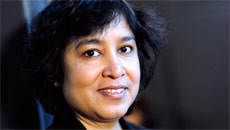
    Taslima diagnosed with breast tumours in US

    Taslima diagnosed with breast tumours in US
    Exiled Bangladeshi writer Taslima Nasreen has been diagnosed with breast tumours at a hospital in New York. Doctors found the tumours "quite big" and advised her biopsy to check on possible malignancy, bdnews24.com reported.

    Taslima diagnosed with breast tumours in US

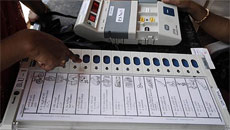
    Election Special: Now, Punjab candidates stand vigil where EVMs stored

    Election Special: Now, Punjab candidates stand vigil where EVMs stored
    The last time this happened was 37 years ago when citizens' groups stood guard outside the rooms where the boxes containing the ballots cast in the 1977 general election - after the emergency was lifted - were stored. 

    Election Special: Now, Punjab candidates stand vigil where EVMs stored