Wednesday, June 10, 2026
ADVT 
International

Indian-Origin Scientists Develop New Super-Thin Material

IANS, 04 Aug, 2015 12:10 PM
    Indian-origin scientists Swastik Kar and Srinivas Sridhar have developed a new super-thin light-weight material with potential applications in a range of tools that we use everyday -- from cameras to computers, says a new study.
     
    The new material spun out of boron, nitrogen, carbon, and oxygen shows evidence of magnetic, optical, and electrical properties as well as thermal sensitivity. 
     
    Its potential applications run the gamut: from 20-megapixel arrays for cellphone cameras to photo detectors to atomically thin transistors that when multiplied by the billions could fuel computers, the study said.
     
    The researchers from Northwestern University in Illinois, US found the material while working for a four-year project funded by the US Army Research Laboratory and Defense Advanced Research Projects Agency.
     
    They were charged with imbuing graphene with thermal sensitivity for use in infrared imaging devices such as night-vision goggles for the military.
     
    Kar and Sridhar spent a lot of time trying to get rid of oxygen seeping into their brew, worried that it would contaminate the “pure” material they were seeking to develop.
     
    "ThatÂ’s where the Aha! moment happened for us,” said Kar, assistant professor of physics in the College of Science. 
     
    "We realised we could not ignore the role that oxygen plays in the way these elements mix together,” Kar, an alumnus of Indian Institute of Science, Bangalore, noted.
     
    "So instead of trying to remove oxygen, we thought: Let’s control its introduction,” Sridhar, professor of physics and director of Northeastern’s Electronic Materials Research Institute, said.
     
    Oxygen, it turned out, was behaving in the reaction chamber in a way the scientists had never anticipated: It was determining how the other elements -- boron, carbon, and nitrogen -- combined in a solid, crystal form, while also inserting itself into the lattice. 
     
    They named the new material 2D-BNCO, representing the four elements in the mix and the two-dimensionality of the super-thin lightweight material, and set about characterising and manufacturing it, to ensure it was both reproducible and scalable. 
     
    The findings appeared in the journal Science Advances.

    MORE International ARTICLES

    Sikh Cop, Sandeep Singh Dhaliwal, Makes History In Texas, To Be First To Wear Turban

    Sikh Cop, Sandeep Singh Dhaliwal, Makes History In Texas, To Be First To Wear Turban
    In one of the biggest goodwill gestures to one of the largest communities in the US -- the Sikhs -- the state of Texas has allowed on-duty Sikh officers to sport essential Sikh religious symbols like beards and turbans.

    Sikh Cop, Sandeep Singh Dhaliwal, Makes History In Texas, To Be First To Wear Turban

    Hindus In Malaysia Slam Cleric's Views On Garlanding PM Najib Razak

    Hindus In Malaysia Slam Cleric's Views On Garlanding PM Najib Razak
    Ethnic Indian Hindus in Malaysia have strongly criticised a Muslim cleric's suggestions that Prime Minister Najib Razak should not have donned a "Hindu" attire, nor should he have been garlanded at a "Hindu" ceremony, media reported Saturday.

    Hindus In Malaysia Slam Cleric's Views On Garlanding PM Najib Razak

    Parents Of Islamic States's American Hostage Hope She Is Alive

    Parents Of Islamic States's American Hostage Hope She Is Alive
    The parents of the female US aid worker kidnapped by the Islamic State (IS) refused to believe that she has been killed in Jordanian airstrikes as claimed by her captors, media reported Saturday.

    Parents Of Islamic States's American Hostage Hope She Is Alive

    'Pakistan No Place For Women'

    'Pakistan No Place For Women'
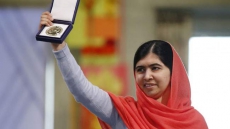
    Even Nobel Peace Prize winner Malala Yousafzai and social activist Mukhtaran Mai are not being honoured in Pakistan as women still remained the most backward in the country, a leading daily said Saturday.

    'Pakistan No Place For Women'

    After Obama's Shots, NYT Asks Modi To Break His 'Dangerous Silence'

    After Obama's Shots, NYT Asks Modi To Break His 'Dangerous Silence'
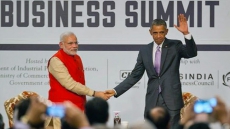
    As President Barack Obama's comments that religious intolerance in India would have shocked Mahatma Gandhi raised a storm in India, the New York Times asked Prime Minister Narendra Modi to break his "deafening silence."

    After Obama's Shots, NYT Asks Modi To Break His 'Dangerous Silence'

    India Affirms Commitment To Rights Of Girl Child

    India Affirms Commitment To Rights Of Girl Child
    Vowing to create a "world fit for children", India has reaffirmed its focus on the development of the girl child, ensuring her education and fighting to end discrimination.

    India Affirms Commitment To Rights Of Girl Child