The Russia-India-China (RIC) initiative is rooted in former Russian Prime Minister Yevgeny Primakov's ideas and vision of having a powerful troika. He detested the United States' unipolarity in the post-Cold War era. The US viewed Russia as a declining regional power, especially when compared to its primary strategic competitor China. It is relevant to point out that Primakov was the first top-ranking leader among the P-5 nuclear weapon states to visit India in December 1998, since Pokhran-II in May 1998.
While Russia maintains attributes of a great power, such as a large nuclear arsenal and permanent United Nations Security Council (UNSC) membership, its status as a global competitor has significantly diminished in the eyes of US officials.
The modern Russian Federation positions itself as a great power that seeks to protect and promote its interests in the international arena, unlike the former Soviet Union, which aimed to cast the world in its own image.
In June this year, Russian Foreign Minister, Sergei Lavrov highlighted the importance and potential of the Special Privileged Strategic Partnership with India and the role played by former Primakov. "The legacy of Yevgeny M. Primakov is also well known. It was he who many years ago came up with the initiative to form such a non-bureaucratic 'troika' - RIC (Russia, India and China). Since then, it has met regularly over the past few years. Now we are on a break. First, the pandemic intervened, and then the escalation on the border between India and China served as a 'brake'. Now, given the reports that these escalations are easing, we expect that the work of RIC will be restored," Lavrov stated in Moscow.
RIC grouping has had at least 18 meetings of its Foreign Ministers and held three informal leader-level summits, the last of which took place in June 2019 in Saint Petersburg. The group occupies 19 per cent of global landmass and contributes 33 per cent of global GDP. All three countries are members of the BRICS, SCO and G-20 groupings. All three countries also oppose unilateralism and support the idea of a multipolar global governance model thereby offering an alternative perspective on global issues, advocating for equity and reforms in global institutions. Additionally, RIC acts as the voice of Global South transforming the Western-dominated world through South-South Cooperation.
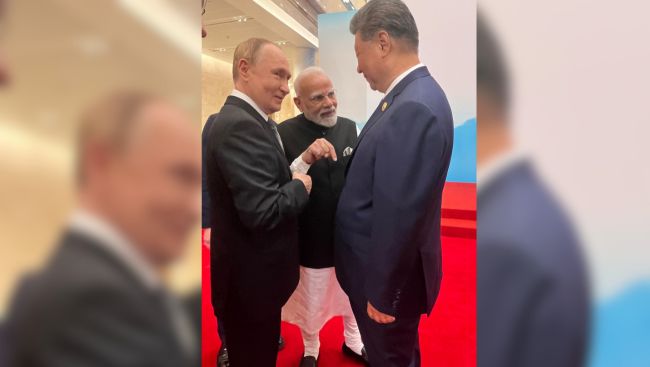
At the SCO Summit in China's Tianjin on Monday, the three major world powers cemented their strategic partnership and presented a unified image notwithstanding all three having some sort of friction with the US. Each country has its own perceptions and approaches to critical issues, such as multipolar world order, counter-terrorism and cooperation. The three countries are likely to solidify their ties based on mutual trust. Further, the three regimes serve national interests based on pragmatism and flexibility.
All three countries are also responsible nuclear powers with Russia and China being permanent UNSC members. On connectivity and integration projects, this troika has noteworthy competence and expertise. As three leaders huddled and mingled at the Tianjin SCO Summit, President Putin's words, "We three friends…" has delivered a definite signal to the world of modification and reshaping of RIC.
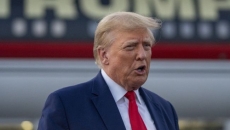
The combined population of these three countries exceeds three billion people, representing nearly 37 per cent of the world's population. India has surpassed China to become the world's most populous country. India's share of global GDP in 2025 is estimated at 10.0 per cent, and it's projected to reach 11.3 per cent by 2030. Relations between the US and India have experienced a significant downslide over Trump's tariffs of 50 per cent on goods to penalise Delhi for buying Russian oil and weapons.
Simultaneously, a thaw, including discussions on border de-escalation after the violent 2020 Galwan Valley skirmishes, has been initiated in the Sino-Indian relations though underlying territorial disputes remain. This shift could be a strategic move by China to limit India's alignment with the US or a hedge by India against US unpredictability. However, this pivot may not be absolute; it is a tactical rebalancing reflecting India's pursuit of 'strategic autonomy' amidst a topsy-turvy geopolitical landscape.
For the RIC to mature, a successful reboot of the RIC format would require substantial efforts to rebuild a foundation of mutual trust, respect, and sensitivity between China and India to allow for meaningful cooperation on regional and global challenges. China and India must overcome a fundamental trust deficit rooted in unresolved border disputes, strategic rivalries, and competing regional interests. While recent bilateral talks show a willingness to reset relations, historical suspicions continue to constrain the RIC's potential.
In Tianjin, Prime Minister Modi stated to the Chinese President that both countries are development partners and pitched for improving trade and investment amidst global tariff ambiguity. PM Modi underscored that India will address the burgeoning bilateral trade deficit of USD $99.2 billion and emphasised the need to maintain peace and tranquility at the disputed border.
India's engagement in the RIC will further strengthen its policy of multi-alignment and its bargaining power with the US. As a 'swing power' within the RIC, India needs to leverage its position to advance its own interests in the Eurasian heartland, particularly by balancing Beijing's influence. However, India's path is fraught with both significant opportunities and deep challenges due to competing interests among the three nations.
In other words, RIC should reaffirm and intensify conflict-free cooperation in the world of competitive authoritarianism.
The Trump administration's activities have caused confusion and disorder in the international geopolitical arena which urgently requires attention particularly in energy coordination, climate policy, regional connectivity and non-disruptive supply chains.
(The writer is an expert on South Asia and Eurasia. He was formerly with Manohar Parrikar Institute for Defence Studies and Analyses. Views expressed are personal).
Picture Courtesy: X/ Narendra Modi