Sunday, June 14, 2026
ADVT 
International

US Report Highlights 'Widespread Corruption' In India

IANS, 25 Jun, 2015 12:47 PM
    Even as it praised India for holding "the largest democratic elections in history", the US on Thursday highlighted "police and security force abuses" and "widespread corruption" among its "most significant human rights problems".
     
    "India's parliamentary contest in April 2014 was one of the largest elections in history," Secretary of State John Kerry said in his preface to the annual Human Rights Reports speaking of "stifling of free and open media" from China to Saudi Arabia.
     
    "Governments in China, Egypt, Eritrea, Ethiopia, Iran, Russia, and Saudi Arabia, among others, continued to stifle free and open media and the development of civil society through the imprisonment of journalists, bloggers, and non-violent critics," he said.
     
    "For far too many people, 2014 was defined by suffering and abuse perpetrated by terrorist groups exploiting religious discourse and divisions to advance their totalitarian ideology," said Kerry who later presented the report at a State Department briefing.
     
    Taking note of the Narendra Modi-led National Democratic Alliance's victory in the May 2014 elections in India, the report said: "These elections, the largest democratic elections in history, were considered free and fair, despite isolated instances of violence."
     
    "Authorities maintained effective control over the security forces," it said.
     
    In India, "the most significant human rights problems were police and security force abuses, including extrajudicial killings, torture, and rape", as also "societal violence based on gender, religious affiliation, and caste or tribe," the report said.
     
    "Widespread corruption (that) contributed to ineffective responses to crime, including those against women and members of scheduled castes or tribes," it added.
     
    Other human rights problems included disappearances, hazardous prison conditions, arbitrary arrest and detention, and lengthy pre-trial detention, the report said.
     
    "A lack of accountability for misconduct at all levels of government persisted," it suggested.
     
    "Investigations and prosecutions of individual cases took place, but lax enforcement, a shortage of trained police officers, and an overburdened and under-resourced court system contributed to infrequent convictions."
     
    "The judiciary remained backlogged, leading to lengthy delays and the denial of due process. There were instances of infringement of privacy rights," it said.
     
    Noting that "the law in some states restricts religious conversion", the report said, "there were reports of arrests but no reports of convictions under those laws".
     
    "Some limits on the freedom of movement continued," the report said.
     
    "Rape, domestic violence, dowry-related deaths, honour killings, sexual harassment, and discrimination against women remained serious societal problems."

    MORE International ARTICLES

    HIV virus rebound in 'Mississippi Baby' dashes hope

    HIV virus rebound in 'Mississippi Baby' dashes hope
    In a major blow to the scientific community, the HIV virus that was once vanquished in the 'Mississippi baby' by administering aggressive anti-retroviral therapy before she was barely 30 hours old has rebounded.

    HIV virus rebound in 'Mississippi Baby' dashes hope

    Rio's Christ the Redeemer restored to former glory

    Rio's Christ the Redeemer restored to former glory
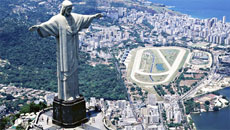
    The Christ the Redeemer statue that crowns Corcovado mountain here, being repaired since February after being damaged by lightning, has been completely restored two days before this Brazilian metropolis hosts the 2014 World Cup final between Argentina and Germany.

    Rio's Christ the Redeemer restored to former glory

    Pakistani TV shows: Breaking down walls of mistrust, delusions

    Pakistani TV shows: Breaking down walls of mistrust, delusions
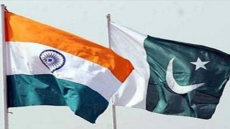
    "Mulk taksim huye, dil to abhi ek hai/Isi liye hamne khidkiyan kat rakhi hai deewaron mein (The nations were divided, but hearts are still one/That is why we've cut windows into the walls (between us))", wrote an Urdu poet. Divided amid bloodshed, experiencing long spells of adverse relations punctuated by armed conflict, Indians and Pakistanis have however never lost their fascination for each other - despite the prevalent stereotypes.

    Pakistani TV shows: Breaking down walls of mistrust, delusions

    Indian woman arrested for child abduction in US

    Indian woman arrested for child abduction in US
    An Indian woman was arrested in the US when she arrived at the Dallas-Fort Worth airport eight years after she apparently forcibly took her son away to India and brought him back again.

    Indian woman arrested for child abduction in US

    What makes cities warmer than countryside

    What makes cities warmer than countryside
    Variation in how efficiently urban areas release heat back into the lower atmosphere - through the process of convection - is the dominant factor in the daytime "urban heat island" (UHI) effect, a phenomenon that makes urban areas significantly warmer than the surrounding countryside.

    What makes cities warmer than countryside

    This dog can sniff out porn material

    This dog can sniff out porn material
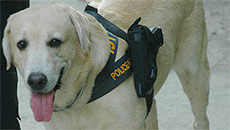
    A golden Labrador with the Rhode Island internet crimes against children task force in the US has a perfect nose for computer hardware that can help against rising cases of child pornography.

    This dog can sniff out porn material