The Indo-US diplomatic crisis that erupted in 2013 with the arrest of woman diplomat Devyani Khobragade was not only a "low point" in ties but both sides learnt "very important lessons" from it, a top official of the outgoing Obama administration has said.
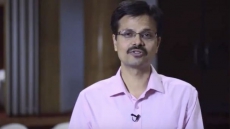
"The diplomatic crisis that unfolded within weeks of my coming in, surely was a test for both countries. I think, not only it was a low point but more importantly it was a learning moment for both countries. We drew very very important lessons on both sides from that," Assistant Secretary of State for South and Central Asia Nisha Desai Biswal told PTI.
Sharing some of these lessons, Ms Biswal said first lesson learnt was that one cannot allow for or afford for complacency to creep in to a relationship, which is as important for the US-India relationship.
"It requires constant attention to issues large and small. Two, you can't allow small issues to fester or go unattended. Three, you have to operate in each other countries in a way that is consistent with and in accordance with the legal and regulatory acts of that country," she said.
Devyani Khobragade, a 1999-batch IFS officer was arrested on December 12, 2013, in the US when she was India's Deputy Consul-General in New York on visa fraud charges and for allegedly providing false declarations in a visa application for her maid. She later was released on a USD 250,000 bond.
She left the US after getting full diplomatic immunity. The incident had triggered a diplomatic row between the US and India.
"What we are trying to do is to make sure that we are in compliance and two that if a problem arises that we act quickly to engage our counterparts and work through to resolve. Because when those communication streams breakdown and when we are not acting aggressively to manage these issues that's when you leave room for the crisis to escalate and to take on different order of magnitude," Ms Biswal noted.

Ms Biswal said there would always be issues that would come up between the two countries.
"India is an extraordinarily complex country, complex not only in terms of its diversity and its society, but also complex in terms of the legal structures that govern India between the central government, the state government, its all different legal environment," Ms Biswal said.
The US is similarly an extraordinarily complex society with its own national and state laws with different layers of law enforcement and layers of states and local courts and so the actions that can be brought forth by in a locality, in a municipality by a state are not necessarily within the control of the central government, she said.
"But what is within our control and what is within the control of Ministry of External Affairs in India is the ability to work through and work together to resolve those issues and to address those issues in a way that is transparent and that builds confidence and that's where we are today and that's what we learned lessons from that crisis and from that low point," Ms Biswal said.
"I am hopeful that we will not find ourselves in that situation again because of the lessons that we have learned. I think, what we learned that we need each other, that we value this relationship too much to allow it to deteriorate," she asserted.
"The crisis forced the two countries to say, wait a minute, we do not want to go down this pathway with India. Or for India to say we do not want to go down with America this pathway. We need each other, we want each other to be strong partners, we got to rebuild it and that's where Foreign Secretary Jaishankar when he came in as Ambassador was quite forceful about that," she said.