Three momentous events, all in November-December 1979, are the genesis of a great deal of chaos the world faces today.
First, was the return of Ayatollah Khomeini to Tehran and the Iranian occupation of the US embassy, a siege which lasted 444 days. The siege began Nov 4.
The Iranian revolution coincided almost exactly with the siege of the Grand Mosque in Mecca Nov 20, 1979. Armed Wahabis charged with the missionary zeal of the Ikhwan ul Muslimeen or a virulent Muslim Brotherhood opposed to the Saudi monarchy occupied the mosque.
The cloak of secrecy the Saudi state threw on the 15-day siege gave rise to rumours that Iran of the Ayatollahs was involved. Neither the Saudis nor their American backers were interested in absolving Iran of the outrage. So they allowed the rumour to stand.
The siege was actually a manifestation of widespread anger with the Saudi monarchy’s minimal shift away from Wahabi puritanism. There was universal disgust with the substantial American presence around the oil wells of Dahran. The rebels saw the “American infidel” as a harmful influence on Wahabi faith.
The twists and turns the media gave to the story fuelled anti-Americanism worldwide. The US embassy in Islamabad was set on fire.
Just then the Soviets obliged. They moved into Afghanistan on Christmas eve. This became the third momentous development of 1979.
The world’s eyes were fixed on the Soviets in Afghanistan and the Islamic revolution in Tehran. The far reaching potential in Juhayman al-Otaybi’s revolt to topple the House of Saud was diligently hidden from public view.
The Saudi rulers, including Minister for Internal Security Prince Nayef, found in President Jimmy Carter’s National Security Adviser Zbigniew Brzezinski a willing partner to transform danger into an opportunity.
Otaybi’s jehad against the Saudi state and against the Americans would be transformed into a 20th century crusade against Soviet Communism. Once the Soviets were overcome, Iranian Shiaism would be the next target. Then Akhwan ul Muslimeen or Muslim Brotherhood (as in Egypt recently) and so on. Internal anger in Saudi Arabia would be given an external outlet, almost in perpetuity.
Saudi security would be tied to enemies outside its borders. Take for instance, the illogical situation in Bahrain which is linked by the 37-km Causeway to Saudi’s oil rich, Shia dominated, eastern regions of Dammam and Qatif.
Bahrain’s Sunni monarchy, the House of Khalifa, treats 80 percent of its population, which happen to be Shia, as “the opposition”. The forward looking crown Prince Salman Kahlifa along with a US diplomat, Jeffrey Feltman, created a mechanism for greater Shia participation. But before the agreement could be inked, Saudi tanks rolled down the 37-km causeway linking Dammam to Bahrain. The message to the incipient, internal rebellion was loud and clear: Look, we are holding Shia apostasy at bay. They may live, but they may not have power.
On the Muslim world’s centre stage, the Nayef-Brzezinski duet roped in Pakistan’s Zia ul Haq for a mass production of Mujahideen in Afghanistan. These would fight the Soviets and be a bulwark against Shia Iran. Zia would help Arabize Pakistani Islam and wrench it from India’s composite culture.
Meanwhile, the Saudis cooked up a parallel plot. Soviet and Nasserite socialism held sway over Aden and south Yemen. While the Caliphate ended in Turkey in 1924, the Imamat, a more Shia-like institution, lasted in North Yemen until 1962. To check Soviet and Shia influences in the two Yemens, training sanctuaries for jehadists were set up under the supervision of Mohsen al Ahmar, half brother of Yemeni strongman Ali Abdullah Saleh. These trained jehadis have today morphed into Al Qaeda in the Arabian Peninsula.
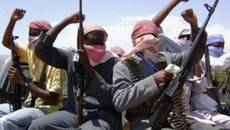
From Aden to Somalia is a short boat ride. This is a simple logistical explanation for the expansion of Al Shabab terrorists into neighbouring Kenya and beyond. A brigade strength Indian Peace Keeping Force (bag pipes and all) was dispatched under Gen. Mono Bhagat in 1994 to quell the civil war after the fall of Somalian strongman, Siad Barre, in Mogadishu. I have extensive TV footage of this campaign. It was a vicious inter clan conflict. Somalia was a peculiar country: violent but totally secular. That is why al Shabab is a puzzle.
Likewise, one could never have imagined jehadism in Qaddafi’s Libya either. When Secretary of State Hillary Clinton materialized in Tripoli she spoke the memorable line: “I came, I saw and he died.” The split screen had her in one half and Qaddafi in the other, screaming, sodomized by a knife.
An efficient dictatorship was thus transformed into a series of feuding tribes. Jehadists, identified as the ones involved in the Danish cartoon mayhem, began to populate Benghazi where eventually US ambassador Christopher Stevens was murdered. Jehadi legions crossed into southern Egypt on the one hand and past Niger into Mali, desecrating the great Sufi mosque of Timbaktu, exactly as the Taliban in Afghanistan had blown up the Bamyan Buddha. Further south, the boost to Boko Haram in Nigeria and Islamic militancy along the Sahel, all derive their DNA from Afghanistan, after the triple tumult of 1979.
More recently the inability to oust Bashar al Assad from Damascus and the durability of Nouri al Maliki in Baghdad where Sunnis suffered their first status reversal once Saddam Hussain and the Baathists made way for the first Shia government have added to Sunni rage, stoked by Saudi Arabia.
When Saudi Arabia, Qatar, Turkey, all with American and European help, provided men, money and arms for the civil war in Syria, Sunnis began to sense power. Now external support is drying up. The moment therefore has produced the man. Abu Bakr Baghdadi of the ISIS has emerged a latter day Otaybi, independent of all past sponsors, turning viciously to bite the very hand that feeds. Americans are beginning to learn yet again an old lesson: in the ultimate analysis, there are limits to power.
Meanwhile, the worry in the subcontinent ought to be on a different count: is a Baghdadi-like danger possible in our neighbourhood?