As Pakistan marks the first year following the Peshawar attack, surviving school children, teachers and parents have been attempting to make the long journey back to normality.
The school attack on December 16 last year in the provincial capital of Khyber-Pakhtukhwa which left 140 children dead was seen by many as the worst in the country's bloody history of terror attacks.
The surviving students still face the trauma and horrific memories of the attack, but they are back in their classrooms.
For the first time in its 13-year-old battle against terror, the carnage united the country, including all political parties - irrespective of their differences.
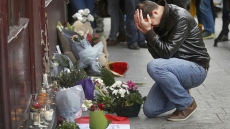
While schools and universities across the country hold candle-light vigils and pledges to ensure that such an incident is not repeated, parents of the dead hold on to the last memories of their children's in the form of their belongings.
Pakistan, a victim of home-grown terrorism, has faced more than a dozen attacks in over a decade of violence where the toll of innocent victims has consisitently risen, but never before had the proponents of terror attempted to massacre children on such a large scale.
The sense of resulting shock and outrage across the world was unprecedented.
In June 2014, the Pakistani military launched a ground offensive to clear the terrorists from the North Waziristan tribal region, the largest sanctuary carved out by them in the Afghanistan-Pakistan region.

The militants then dispersed, many of them moving into the neighbouring Khyber region, the backyard of Peshawar.
Some of the militants, fighting under the Tehreek-e-Taliban banner, carved out sanctuaries in north-eastern Afghanistan and remained secure until they came under attack amid growing signs of improvement in Pakistan's relations with the US and Afghanistan.
A day after the Peshawar school attack, as the nation mourned, Pakistan's united political leadership announced that it would no longer be willing to make any distinction between "good" and "bad" terrorists -- a differentiation that had invited scathing criticism when enunciated by Islamabad.
Pakistan's Prime Minister Nawaz Sharif vowed to carry on fighting terror until the last terrorist was killed.
As he was making the announcement, Pakistan's Army Chief General Raheel Sharif was meeting Afghan President Ashraf Ghani and International Security Assistance Force (ISAF) commanders in Kabul to seek their assistance in fighting a menace which he said had "hit the heart of the Pakistani nation".
The political leadership also unanimously approved a 20-point National Action Plan.

The government decided to set up military courts to try civilians involved in terrorism. The move was opposed by human rights groups who argued it would lead to miscarriage of justice and summary executions.
The government announced an end to the moratorium on capital punishment and subsequently hanged over 300 people convicted of murder, rape and terrorism, among other charges. These included four terrorists linked to the school massacre.
Amnesty International, in its report on November 24 this year, said it recorded 299 executions in Pakistan since the death penalty was reinstated in March.
The hangings of the school assailants were timed to coincide with the first anniversary of the massacre. The trials were held in a military court, and the proceedings were shrouded in secrecy.
Pakistan has long been accused by its critics of trying to control Afghanistan through Taliban so as to prevent its arch-rival India from using that country to open up a "second front" against Islamabad.

Pakistan has also been accused of using militant groups as proxies to destabilise India.
However, since many Islamist militants have now begun to consider Pakistan itself to be a legitimate target, Islamabad may not want the Taliban to be ascendant in post-NATO Afghanistan.