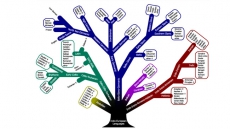
A short list of noteworthy books that guide readers on ways to achieve success.
There has been a lot written about achieving success, happiness and fulfillment. So much so, that it can be difficult to find the true gems that actually work, among all the others. Below is a short list of noteworthy books that guide readers on ways to achieve success and change your life for better.


1. The 7 Habits of Highly Effective People by Stephen Covey
Books written before the First World War focused on things such as humility, honesty, simplicity and patience. In other words, basic principles that could lead to true success and enduring happiness, yet in practicality, are so hard to achieve. On the other hand, literature written in the last century or so has shifted focus onto encouraging more superficial traits – including some which have grounding, such as a positive outlook and self-esteem, and others that are clearly deceptive and manipulative, such as techniques of persuasion or forms of intimidation, such as ‘power poses’. In other words, shortcuts and quick fixes.
The Seven Habits of Highly Successful People is unique in the fact that it doesn’t try to conform to how most success literature is written these days, instead back treads to draw awareness to how, for long-lasting success, character is more important than personality. In doing so, it offers a unique and enlightening viewpoint of what it means to succeed, and the right ways to get there.

2. The World is Waiting for You edited by Tara Grove and Isabel Ostrer
Very rarely is it that we are able to be one of the few witnesses of an incredibly inspirational speech, let alone, one spoken by a world-renowned figure. The World Is Waiting for You: Graduation Speeches to Live By from Activists, Writers, and Visionaries edited by Tara Grove and Isabel Ostrer offers a compilation of the most inspiring content of recent graduation speeches by an astounding array of people; reminding us of what it takes to be great. The speakers include Noam Chomsky, Chimamanda Ngozi Adichie, and Howard Zinn, among others.

3. Deep Work by Cal Newport
We live in a very distracted universe, where, quite literally, the entire world is at our fingertips at a moments notice. So, how do we focus in this world, when there is so much to pull our attention all the time? This is the question that Cal Newport, attempts to answer in Deep Work: Rules for Focused Success in a Distracted World. What he focuses on, and suggests, is not a quick fix solution, but a much more meaningful way to work. Newport does a marvelous job of turning efficiency into an exact science.

4. The Happiness of Pursuit by Chris Guillebeau
There are not many Don Quixotes left in our time – those who seek for the sake of seeking; those who climb not for the view at the peak but for the journey itself. Even the idea sounds bizarre, and a waste of time. Chris Guillebeau suggests the opposite in The Happiness of Pursuit: Finding the Quest That Will Bring Purpose to Your Life; he states that it is enjoyment of the pursuit of a goal that should give us more happiness than reaching the goal itself. Not convinced? Read it.

5. The Happiness Equation by Neil Pasricha
Great work leads to success which then leads to happiness. This is the fundamental train of thought most of us have lived with all our lives. Unfortunately, as Neil Pasricha explains in The Happiness Equation: Want Nothing + Do Anything = Have Everything, this rarely works out in real life. In fact, he elaborates that the pattern actually is happiness leads to great work, which leads to success. This is a hard pill to swallow at first, because in our minds, we have always equated happiness as the end goal. There is always something to do, before we get to happiness, and it seems bizarre to suggest that happiness is actually the first stepping stone. What Pasricha does best is write in a very causal and simple manner, making it incredibly easy to absorb the pearls of wisdom he’s scattered throughout The Happiness Equation.