

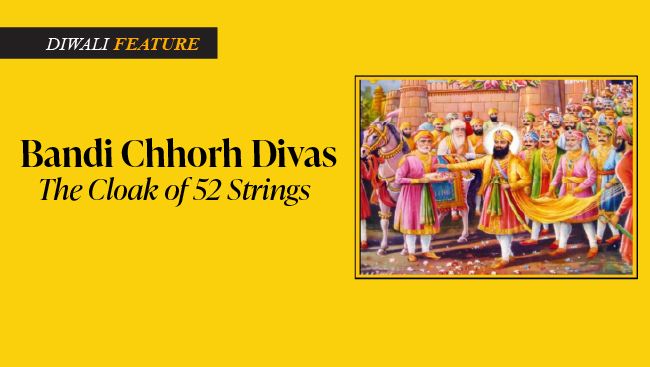
Bandi Chhor Divas is remembered not only as the day Guru Hargobind Sahib Ji walked free from imprisonment at Gwalior Fort, but as the day freedom itself was redefined.
Guru Ji had been detained, in part, because of the growing influence and independence of the Sikh community, which unsettled the Mughal court. Alongside him were fifty-two Hindu kings and princes who had been imprisoned due to political rivalries and suspicions of disloyalty.
While the emperor agreed to Guru Ji’s freedom, Guru Hargobind Sahib Ji insisted he would not leave unless the fifty-two detained kings and princes were also released. Cunningly, Jahangir set a condition: only those who could hold on to Guru Ji’s cloak during his walk from the fort would be allowed to leave.
In response, a special robe was made with fifty-two tassels, each serving as a lifeline for one ruler to hold as they walked out of captivity together. More than a political maneuver, what endures is the image of a garment transformed into a symbol of justice, compassion, and the idea that true freedom is never solitary but shared.
As such, the symbolism of Bandi Chhor Divas extends far beyond the historical event. Each string can be seen as representing a commitment, a bond, or a cause. Taken together, the cloak reminds us that freedom is not singular. It is multiplied when it is shared, and it becomes sustainable only when communities are lifted together. Modern celebrations of Bandi Chhor Divas carry this lesson into acts of charity and service. Families light candles and join in prayer, but they also organize food drives, langars, donations, and community meals that mirror Guru Ji’s commitment to others.

The fifty-two strings may be interpreted today as reminders of the diverse struggles people face in contemporary life.
Some may see them as calls to support social justice movements, while others view them as encouragement to stand with marginalized communities. Each string symbolizes the ties that bind us in responsibility and compassion. In this way, the historical act of liberation has evolved into an enduring ethic of solidarity.
Canadian celebrations of Bandi Chhor Divas showcase this symbolism through community gatherings at gurdwaras. Illuminated by rows of candles, these spaces become centers of reflection and service. Volunteers distribute food to neighbors, regardless of background, demonstrating that the values of the cloak extend beyond the Sikh community. Just as Guru Ji ensured that no ruler was left behind, these observances remind us that society flourishes only when inclusivity is practiced.
The image of the cloak also speaks to leadership. It was not enough for Guru Hargobind Sahib to walk out of prison alone; true leadership meant ensuring that others shared his liberation. In modern contexts, this resonates with the idea that leaders must carry responsibility for those they guide. The cloak becomes a metaphor for ethical leadership, one that prioritizes justice and collective well-being over personal gain.
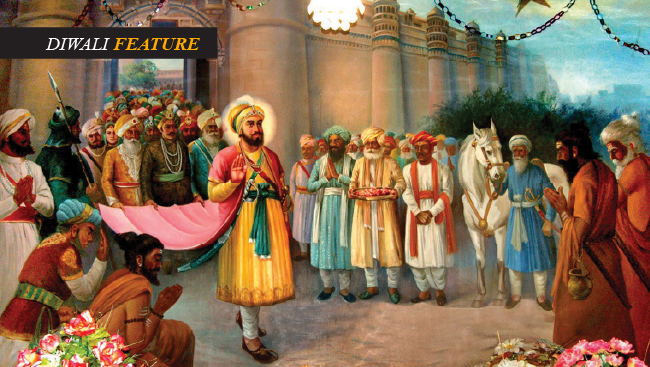
In modern times, the cloak’s message feels urgent. From war zones that displace millions, to the fight for civil rights, to harm as close to our fingertips as cyberbullying, it is tempting to believe these struggles do not touch us and only impact someone else. However, the truth is that injustice anywhere tugs at the strings we all hold. The cloak reminds us that freedom and dignity are never private possessions; they are responsibilities carried together.
Consequently, each string of the cloak is a thread of accountability. Whether interpreted spiritually, socially, or personally, the message is clear: freedom is incomplete when others are left behind. By celebrating Bandi Chhor Divas, communities affirm a commitment to walk together, bound by ties of justice and care. The cloak of fifty-two strings is not a relic of the past; it is a living metaphor that continues to inspire.