Many questions prevail: Are we safe? Will there be another lockdown? Is it good enough following governmental restrictions or should I do more? Am I overreacting? Is it really okay to hug? The list can go on and on.
As the world attempts to head back to normal after the COVID-19 pandemic lockdowns, a thought strikes many. The world normal no longer holds a unified meaning for all. While some are seeking normalcy by doing things and feeling what they felt before the pandemic, others are trying to make peace with the idea that their normal has forever shifted. Without a doubt, there is an expected level of anxiety amongst the public, especially as workplaces and schools begin to open up. Many questions prevail: Are we safe? Will there be another lockdown? Is it good enough following governmental restrictions or should I do more? Am I overreacting? Is it really okay to hug? The list can go on and on.
According to a new study done by the Association for Canadian Studies, more than half of the Canadian population feels somewhat anxious about the return to normal after COVID-19. The data comes in after the dissemination of vaccines. While one end of the spectrum may consist of people feeling over-joyous about next steps such as border openings, many Canadians are fearful of the health scare making a comeback.
This fear is not at all irrational. The economic impact of the virus, worry of contracting the virus, and difference of opinions regarding physical distancing are all reasons that may add to the anxiety. Note that particular portions of the population have experienced heightened trauma during the pandemic. This includes medical professionals, those who have lost loved ones, those who have outlived the virus, and those that were unable to see family because of travel restrictions. Even outside of these experiences, no one is immune to the trauma. Anyone can experience anxiety given their unique set of experiences and reactions to recent events.
The drawback is that constant worrying may hinder enjoyment of life. In fact, otherwise familiar places that people have had fun in (restaurants, concert halls, malls, etc.) can seem to be daunting lines to cross. Especially since avoiding crowded places has been a public health measure, returning to public places can be intimidating. The level of worry depends on each individual and the varying transmission rates within a particular community. Note that there is still an abundance of uncertainty about variants, which does not help the situation much.
However, the anxiety you are feeling may not just be limited to health concerns. Social anxiety surrounding seeing people again is a common theme. Isolation has been a mantra for many during the pandemic, especially front-line workers. The thought of assimilating into the world – as if all is good – can appear to be non-genuine or difficult to process. If these thoughts and feelings are able to manifest themselves into your reality to the extent where you are persistently avoidant of specific activities, your quality of life may be negatively impacted. In this case, it is important to speak to a trusted counselor or even family doctor to seek out resources that may be of help in making a change. Even though this is a global event, individual impact on mental health cannot be undermined.
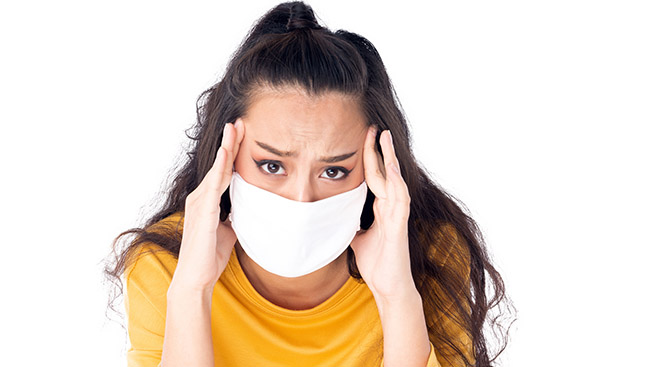
To better manage COVID-19-related anxiety, here are some action steps you can take:
Stay informed, but to an extent. Do not go into an information overload by reading or listening to too much negative knows. Be in the loop to keep yourself knowledgeable, but do not go down the dark hole of googling too much.
Beware of fake news!
Focus on what you do have control over. Physically distance, wear a mask, and wash your hands (not obsessively, though). You cannot control others and the virus in general, so only give your attention to what is in your hands. Leave the rest to nature.
Stay connected. Know that you are not in this alone. Talk to others about how you are feeling and ask how they have been dealing with their anxieties regarding the return to normal. You’ll be surprised at how many people think just like you.
Practice self care. Remember to be kind to yourself. The COVID-19 pandemic has been a traumatizing event for all, and you deserve all the self-love that you can give to yourself. Do not hesitate to say no and prioritize your needs and wants. Get good sleep. Be mindful and grateful.
Communicate your boundaries. Don’t feel bad about telling people what you are not okay with. If you’d like to ease into the hugs and slowly transition to larger family gatherings, let your loved ones know. They’ll understand! Do only what you’re ready for.
While vaccinations offer relief and have opened the gateway to some version of normalcy, the COVID-19 virus cannot yet be completely described as a thing of the past. Therefore, we have limited options other than to accept this is a part of life and learn to navigate around it. By understanding your anxieties, talking about how you feel, and seeking help when needed, you’ll be ready to go and make a mighty comeback into the (hopefully) soon-to-be post-COVID19 world!