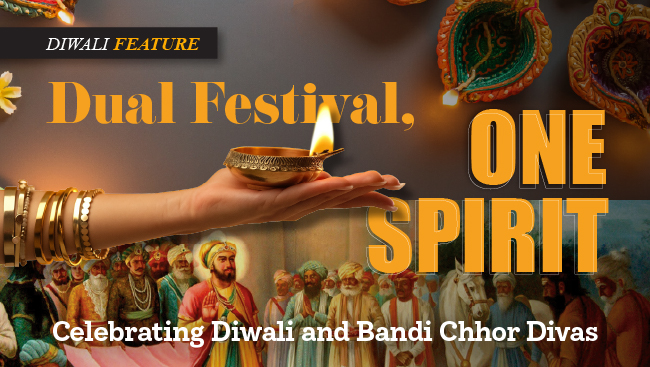
Diwali and Bandi Chhor Divas arrive in the autumn calendar with stories that originate from different traditions, yet they share a rhythm of light, resilience, and renewal.
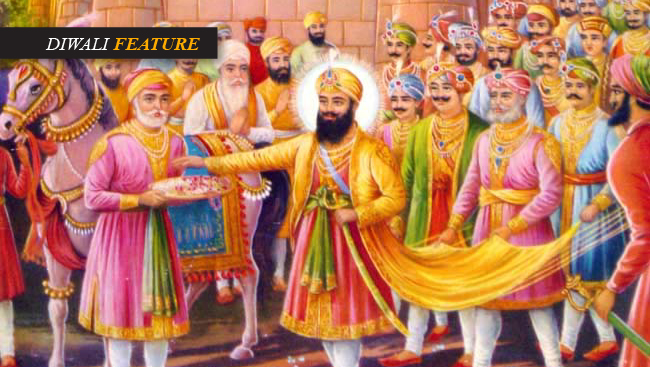
On one side is the story of Diwali, the return of Lord Rama to Ayodhya after years of exile and a fight against darkness. On the other is the account of Bandi Chhor Divas, the release of Guru Hargobind Sahib Ji and fifty-two imprisoned kings who walked free by holding onto the strings of his cloak.
Though their histories unfold in separate contexts, both festivals remind communities that even the heaviest shadows can be lifted by courage and compassion.
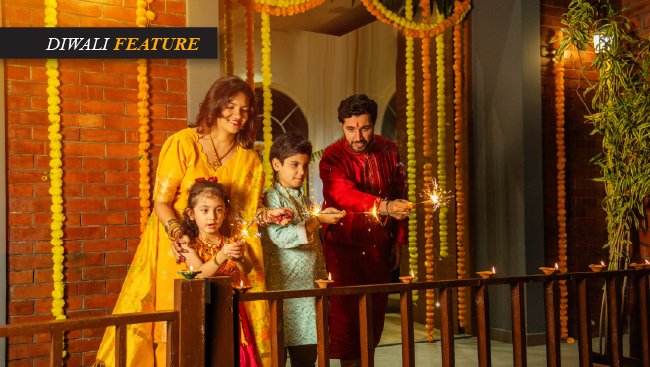
Across the world, these observances manifest in homes, temples, gurdwaras, and community centers. Families line their windows with flickering diyas, children play with sparklers, and fireworks fill city skies. In other places, candles are lit, prayers are offered, and volunteers prepare food drives and langars to extend the meaning of freedom into service. The outward acts of celebration are powerful, yet what sustains the festivals are the inward reflections. Both stories place emphasis not only on the triumph of a single individual but also on the collective well-being of an entire community.
In Hinduism, Diwali’s glow signals more than the end of exile; it is a public proclamation that light endures through difficulty.
In Sikh history, the release of fifty-two rulers underlines the principle that freedom is most meaningful when it is shared. Together, these festivals bring families into gatherings that honor heritage and values, but they also extend lessons across traditions. In multicultural societies, many people attend both celebrations, learning that differences of practice can coexist with shared purpose.
The symbolic power of light bridges the two festivals. A lamp or a candle becomes a quiet declaration that darkness, however overwhelming, cannot last forever. That simple gesture translates across cultures and faiths, reinforcing the universality of the message. Children in classrooms may study the festivals together, discovering that even when the narratives differ, the moral centers often align. Community leaders encourage acts of service during these days, connecting spiritual teachings with practical action.
In a world often divided by boundaries of culture or creed, the simultaneous celebration of Diwali and Bandi Chhor Divas is a reminder that traditions can speak to one another. The festivals invite participants to remember that victory over hardship and the pursuit of justice are not confined to one group. They belong to all who value light, freedom, and resilience.
What sustains these observances across generations is their ability to adapt without losing their essence. The festivals travel with migration, taking root in diasporic suburbs, busy urban streets, and rural towns. Wherever they are celebrated, they create community bonds that reach beyond origin stories. Neighbors are welcomed into festivities, students learn from one another, and society gains from traditions that value resilience, justice, and joy.
In fact, a thread that binds these two festivals is the way they transform in the diaspora. Within South Asia, Diwali and Bandi Chhor Divas can appear as distinct, with their own histories, rituals, and meanings. Yet outside of that context, in countries like Canada, the differences blur into something shared. Together, communities explain Diwali and Bandi Chhor Divas to those unfamiliar—often to Western friends—turning them into points of togetherness as well as celebration. In this way, the festivals become more than rituals; they become points of connection, both within the diaspora and with the wider world.
Together, Diwali and Bandi Chhor Divas show that festivals can be more than heritage markers. They can be guiding lights that affirm a common human spirit. Distinct but connected, they shine together each autumn as a shared testament to endurance and hope.