Sunday, December 28, 2025
ADVT 
Life

Love and care influence brain's response to threat

Darpan News Desk IANS, 08 Nov, 2014 10:06 AM
    Remembering the people who love and care for you can help one cope with stress because even recollections of emotional support reduces the brain's response to threat, a new research suggests.
     
    Being reminded of being loved and cared for dampens the threat response and may allow more effective functioning during, and activation of soothing resources after, stressful situations, the study noted.
     
    "These new research findings may help to explain why, for example, successful recovery from psychological trauma is highly associated with levels of perceived social support individuals receive," said senior researcher of the study Anke Karl from the University of Exeter in Britain.
     
    The study discovered that when individuals are briefly presented pictures of others receiving emotional support and affection, the brain's threat monitor, the amygdala, subsequently does not respond to images showing threatening facial expressions or words.
     
    The findings may help refine existing treatments for post-traumatic stress disorder (PTSD).
     
    "A number of mental health conditions such as PTSD are characterised by hypervigilance to threatening information, which is associated with excessive negative emotional responses, amygdala activation and a restricted ability to regulate these emotions and self-sooth," Karl added.
     
    Forty-two healthy individuals participated in the study, in which researchers used functional magnetic resonance imaging (fMRI) to study the brain response.
     
    The study appeared in the journal Social, Cognitive and Affective Neuroscience.

    MORE Life ARTICLES

    Changing school schedule could help kids perform better

    Changing school schedule could help kids perform better
    Instead of forcing your teenager to wake up early for school, finding a way to start school late could be a better way to help him/her perform better, researchers believe....

    Changing school schedule could help kids perform better

    Too Soon? How About Not At All For Halloween Costumes Making Light Of Ebola

    Too Soon? How About Not At All For Halloween Costumes Making Light Of Ebola
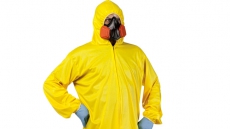
    NEW YORK - No holiday screams pop culture controversy quite like Halloween. So what's the costume flap of the year? It might just be Ebola, as in Ebola zombies, sexy Ebola patients and faux protective gear.

    Too Soon? How About Not At All For Halloween Costumes Making Light Of Ebola

    From Jars To Balloons To Milk Jugs: Ideas For Making Halloween Luminaries

    From Jars To Balloons To Milk Jugs: Ideas For Making Halloween Luminaries
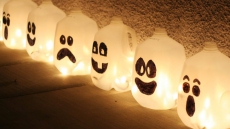
    This Halloween, lighten things up with luminaries. There are lots of quick, do-it-yourself projects to make the flickering lights that welcome partiers or trick-or-treaters.

    From Jars To Balloons To Milk Jugs: Ideas For Making Halloween Luminaries

    Holiday Creep Is Here To Stay: Look No Further Than Halloween For Ugly Sweaters, Festive Trees

    Holiday Creep Is Here To Stay: Look No Further Than Halloween For Ugly Sweaters, Festive Trees
    NEW YORK - Holiday creep, it seems, is here to stay, and it's spookier than it used to be. The blending of holiday traditions — think Hanukkah bush — now kicks off with Halloween in a variety of ways.

    Holiday Creep Is Here To Stay: Look No Further Than Halloween For Ugly Sweaters, Festive Trees

    'Are There Worms In Your Beef?' Mcdonald's Fields Unappetizing Questions About Its Food

    'Are There Worms In Your Beef?' Mcdonald's Fields Unappetizing Questions About Its Food
    The world's biggest hamburger chain is confronting unappetizing questions as part of a U.S. campaign to beat back perceptions that it serves Frankenfood. The company has run similar campaigns in Canada and Australia and said Monday it's bringing the effort to its flagship market.

    'Are There Worms In Your Beef?' Mcdonald's Fields Unappetizing Questions About Its Food

    Should White Mom Be Paid For Sperm Bank Mixup That Gave Her A Brown Baby?

    Should White Mom Be Paid For Sperm Bank Mixup That Gave Her A Brown Baby?
    It's an unusual question, arising from an unusual lawsuit prompted by an insemination gone wrong. And it has set off an extraordinary discussion touching on sensitive issues of race, motherhood, sexuality and justice, though the debate begins with one basic premise: You should get what you pay for.

    Should White Mom Be Paid For Sperm Bank Mixup That Gave Her A Brown Baby?