Visiting a bar, going for a picnic in a garden or drinking a coffee in a cafe are all nice ways to meet strangers in Hollywood and Bollywood movies but in real life, societal compulsions and constraints make the youth turn to dating apps, where they feel they can be themselves without being judged or elbowed.
Moreover, dating apps offer the option to display more than your face and physique. While using these apps, you can give people a glimpse into what you like, dislike, what your hobbies and passions are and probably what your personality is like-- things which would elude a person in love at first sight.
Since dating app profiles go beyond just looks, it is essential that they have substance to them. Describing what kind of a person you are not just with pictures but also with your bio, by talking about your interests, etc. can give other users a more dynamic impression of you than the one based on just your appearance.
According to a survey conducted by QuackQuack, one of India's leading dating apps, users responded to questions on what makes for a perfect dating profile for them when they are liking and crushing on the app.
What are the elements of a good bio for you
Most of the people in the age group of 18-30, 72 per cent agree that an eye-catching bio is short, concise, and to the point. "Bios are supposed to be funny and attractive, not long and boring like autobiographies", said one of the QuackQuack users. With a short span of attention, the youth does not look forward to reading long paragraphs about one person when they could just simply skip their profile. For people above 30, 56 per cent of the users prefer reading about the career, life achievements and goals of their matches as opposed to 44 per cent of them who prefer quirky bios.
Men, 45 per cent of them, agree that shorter the bio, the better in contrast to 64 per cent of women who instead like longer bios. People from tier 2 cities like reading longer bios with more details to them and elements that demarcate them from the rest of the users whereas people from metros choose short and funny descriptions instead.
What would you like to see in their pictures
When the question of pictures uploaded on dating apps was brought up, 67 percent of 18-30 year olds said that pictures should be a reflection of what a person does on a regular basis and how they are in real life. To put it simply, pictures of hanging out with friends, pictures of engaging in your favourite activities and sports and pictures that give a sneak peek into who you are. For 87 per cent of men, full length body pictures of users without their entourage was a priority while 59 per cent of women showed preference for pictures with pets. Forty per cent of tier 2 city folks showed no aversion to the use of filters in the pictures uploaded by other users whereas 62 per cent of metropolitan folks did.
Talking about the survey, Ravi Mittal, CEO of QuackQuack said, "Today, dating apps are the first choice of any person who wishes to make friends or look for a partner and it is imperative that the profile of users seems striking and attractive."
What makes their profile unique for you
Fifty-two per cent of people in the age group of 18-30 concur that honesty is what makes a person's profile unique and stand out from the rest. A bio that is written by a person himself is likely to get more likes than the one filled with cliches. Moreover, copied or similar bios are a huge no for the majority of young QuackQuack users. As for men, no mention of past relationships is what ticks all the right boxes for them. Fifty-nine per cent of men agree that they wouldn't like a profile that talks about their ex(es). For women, humbleness was a key factor. A Mr. I, Me, Myself who is all about himself would have his profile skipped by 66 per cent of women. For people in metro cities, good grammar was something that made a profile unique for 74 per cent of them in contrast to 42 per cent of people in tier 2 cities.
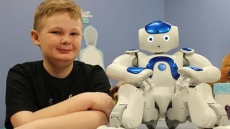
CALGARY — It’s a robot designed to bring comfort to little patients at Alberta Children’s Hospital. Four robots are being used to calm children getting injections or other medical procedures by giving high fives, telling jokes and stories or playing music.
Unemployment could be a vicious cycle. It can change peoples' core personality -- making some less conscientious, agreeable and open -- which may make it difficult for them to find new jobs, says a study.
Have a good look at your partner's fingers during the ring ceremony as men with short index fingers and long ring fingers are nicer towards women, says a study.
Using data from over 150 languages, linguists from University of California, Berkeley have found that "Indo-European languages" originated 5,500-6,500 years ago on the Pontic-Caspian steppe stretching from Moldova, Ukraine to Russia and western Kazakhstan.
Stress can make people with high level of anxiety poorer by denting their confidence to compete, suggests a new study. The findings suggest that stress can even be a cause of social inequality rather than just a consequence of it.