Monday, March 30, 2026
ADVT 
Life

Second-Borns Less Likely To Be Pampered By Mothers?

Darpan News Desk, 10 Aug, 2018 02:22 PM
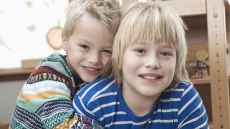
    There is always an unresolved argument between siblings over who is loved more by their mother or who is her favorite. 
     
     
    A recent study has revealed that while mothers hold similar views and attitudes when parenting their first and second children, their parenting behaviors with their two children differ.
     
     
    The study observed 55 mothers interacting with their first child at the age of 20 months and again using the same procedures when their second child reached the same age.


    The behavious of mothers with first-born and second-born children were not similar in rank order. For example, mothers who engaged in a lot of play with their first-borns did not necessarily engage in a lot of play with their second-borns. 
     
     
    However, there was no systematic average difference in the amounts or qualities of mothers' interaction directed toward first and second children.
     
     
    The results suggested that first-born children tended to be more sociable and emotionally available to mothers than second-born children.
     
     
    According to the findings, despite relatively consistent parenting beliefs over time, siblings behave differently from one another by 20 months of age, and mothers behave differently when interacting with their two children at the same age.
     
     
    The full findings are present in the journal- Social Development

    MORE Life ARTICLES

    Get Quirky in Gifting This Diwali

    Get Quirky in Gifting This Diwali
    From induction cookers that can play music to lamps made from recycled wine bottles, to ethnic wear with handmade tribal art and customised cupcakes...

    Get Quirky in Gifting This Diwali

    Why people accept inequality

    Why people accept inequality
    People appreciate fairness in much the same way as they appreciate money for themselves and by that logic fairness does not necessarily...

    Why people accept inequality

    Depressed people, too, believe in brighter future

    Depressed people, too, believe in brighter future
    Like most adults, even depressed people believe in a brighter future, but for them this optimistic belief may not lead to better outcomes, found a research....

    Depressed people, too, believe in brighter future

    Repeated viewing of violence and sex 'desensitises' parents

    Repeated viewing of violence and sex 'desensitises' parents
    In a stunning report, researchers have revealed that when it comes to sex and violence, the more parents watch TV shows or movies...

    Repeated viewing of violence and sex 'desensitises' parents

    How sperms compete to win

    How sperms compete to win
    In situations where a female copulates with several males in quick succession, only the best sperm, marked by speed, size and viscosity...

    How sperms compete to win

    Sibling support boosts altruism in boys

    Sibling support boosts altruism in boys
    A good relationship with a sibling promotes development of sympathy and levels of altruism in boys, says a study....

    Sibling support boosts altruism in boys