Climate change grows more and more serious of an issue by the year, and not enough is done to counteract it.

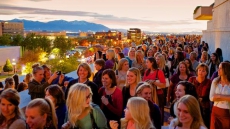
The global climate strikes, which took place all over the world September 20 to 27, had over 7.6 million participants, spread across 185 countries. They involved around 3,024 businesses, 73 trade unions and 820 organizations. This was the biggest climate mobilization in history. As climate change has progressed to alarming rates, it has also become more prominent of an issue over the years, with many world leaders promising changes. In fact, one of the biggest issues prioritized in the 2019 Canadian Federal Election was the environment and what leaders would do to move Canada forward to meeting our climate change goals.
Climate changes are significant changes to the expected average weathers for a particular region, or even the entire Earth. Climate changes are usually long-term. There have been several abnormal variations to climate in the past, a prominent instance being the ice ages. However, there is a key difference between the ice ages, and the climate change happening now. The ice ages, and every other climate change period before now, was due to natural processes of the Earth.

The climate change happening now is anthropomorphic; caused by human beings. There are still natural processes at play, including oceanic processes, volcanic eruption, and variation in solar radiations from the sun among others – but the major factor, by far for why the planet is getting warmer, is humans. Research has shown that the warming of the planet is closely linked to the alarmingly increasing rates of greenhouses gases such as carbon dioxide in the atmosphere. Greenhouse gases are those that effectively trap heat, and insulate the Earth’s surface, causing it to heat up. And the increase in carbon dioxide is linked to the burning of fossil fuels.
The fact that climate change is bad for the environment is focused on quite a bit. However, how exactly is it bad? The answer may be more dire than generally assumed. All over the world, ecosystems are already taking hits because of the climate change crisis. For instance, in BC, recent photographs of starving bears circled the Internet, showing the effects of decreased salmon runs. Dually, this also means that fishermen in BC, and conversely the economy, suffer. Thus, climate change may be starting to creep over to effect society as well, more than might seem apparent at first glance.
In the case of food, as climate change gets bigger on an issue, and the effects of the warming of the planet get more severe, food security becomes unstable. As food supplies get unstable and uncertain, their prices increase, something felt more prominently the lower you are on the economic ladder. Climate change can also force species to relocate, exposing humans to new diseases. More directly, droughts, degraded air and water quality are hazardous to health, and will probably cause increased hikes in mortality in the coming years.

So what can people do to start protecting the environment? Most things are quite well-known these days. Decreasing energy consumption at home by using energy efficient lightbulbs, turning devices off at night, using clotheslines, taking showers instead of baths, and having vegetarian days, all contribute to a reduced carbon foot print. On top of that recycle everything possible; it is possible to recycle things that you may not have thought of. Cell phones, glass, unwanted wire hangers, aluminum, newspapers – all can be given a second life. Sites such as 50waystohelp.com offer many more ideas. And also, on a grander note, it doesn’t hurt to show up to rallies to support and add your voice to the millions already protesting for policy change.
Climate change is a problem that, unfortunately, cannot be put on pause while we figure out how to deal with. Humans have permanently changed the history of Earth. If you are not inclined to believe that just yet, know that 97.1 per cent of scientists surveyed in 2013, from every field imaginable, agreed that climate change is not only happening, but humans are the very root of the problem.
Climate change grows more and more serious of an issue by the year, and not enough is done to counteract it. Therefore, it’s important for us to start recognizing it as a ticking clock to a final doomsday, which might not be as far away anymore.