Growing up as a practicing Sikh woman in the Lower Mainland, Vaisakhi has played a pivotal role in shaping who I am and giving me the confidence to own my identity without fear of repercussion. For me, Vaisakhi is far more than a cultural or religious festival; it is a form of collective resilience and an example of multiculturalism at work. It is an affirmation of identity, community, and belonging on a scale that is truly unimaginable unless you have had the opportunity to experience it firsthand.
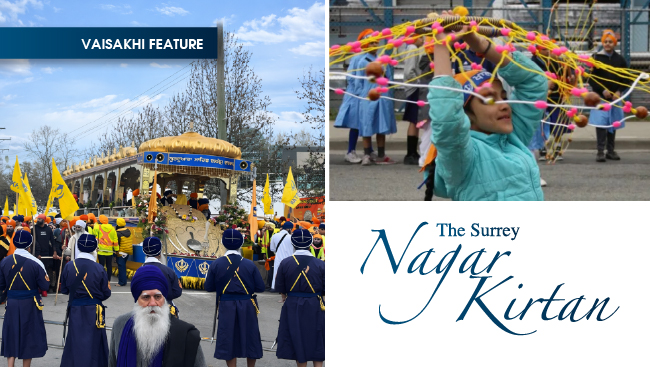
With over 500,000 attendees from a variety of backgrounds, the annual Surrey Nagar Kirtan is the largest Vaisakhi celebration in the world outside of India. At its core, Vaisakhi commemorates the founding of the Khalsa panth by the tenth Sikh Guru, Guru Gobind Singh Ji, and is a celebration of Sikh identity and values. Each year, entire streets are closed off, lined with vibrant floats, with kirtan echoing through the air as hundreds of thousands of people move together in quiet reverence and joyful celebration. Food is prepared and served freely to all without distinction, keeping the Sikh principles of seva and equality alive, in a family-friendly environment free of alcohol and other intoxicants.
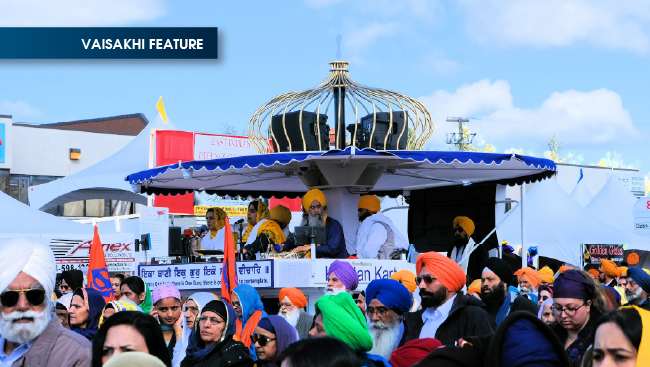
With participation from people of all backgrounds, the seva exhibited at the Nagar Kirtan becomes a bridge between communities, bringing us together in a world that so often seeks to divide us. It creates a safe space for intercultural dialogue and education, allowing our non-Sikh neighbors to learn more about who we are and the values that we stand for. Despite the sheer size and scale of the Surrey Nagar Kirtan, each year passes without any incident, and by the next morning, the streets are cleaner than they were before the Nagar Kirtan, thanks to the tireless work of dozens of volunteers.
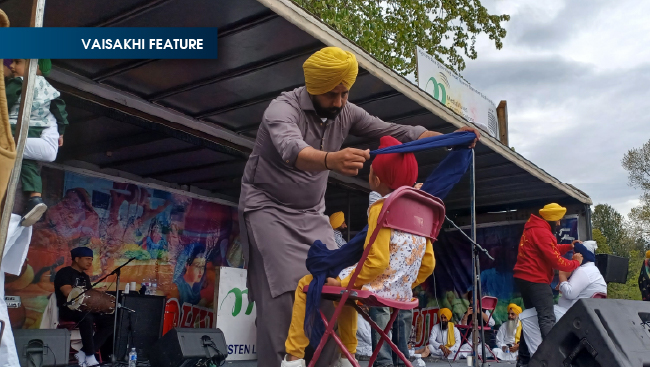
As a young lawyer and human rights activist, I often find myself reflecting on the ways in which the Nagar Kirtan acts as a reclamation of space and an unapologetic assertion of identity. During a time that is rife with political polarization and a general global trend towards the resurgence of far-right ideologies that seek to further marginalize minority groups, the Nagar Kirtan stands as an act of collective resilience in the face of adversity. It reminds us to take pride in our identity and to own who we are without feeling the need to apologize for our existence or to assimilate so as to appease the majority.
The annual sea of dastaars (turbans), brown skin, and colorful suits that flow through the streets of Surrey is a reminder of the strength, power, and beauty that our community and our faith possess. For me, it also provides a moment of spiritual and personal grounding, where the weight of often being the only Sikh, let alone dastaar-wearing, woman in the room is lifted, and I see myself reflected and celebrated by those around me.