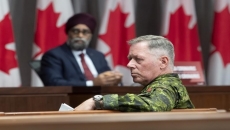
Ottawa has officially announced it has reached agreements in principle with First Nations partners to compensate children harmed by its underfunding of child welfare.
Crown-Indigenous Relations Minister Marc Miller says at $40 billion, the settlement marks the largest in Canadian history.
We are aware that reaching this milestone has been a long time coming for families who were torn apart, and we know that our work is not done. We will continue working with the Parties so that future generations of First Nations children will never face the same injustices
— Marc Miller (@MarcMillerVM) January 4, 2022
Of the billions earmarked to be spent on the matter, $20 billion will pay for compensation and the other $20 billion will be spent on reforming the system over five years.
It says First Nations children living on reserve and in the Yukon who were removed from their homes between April 1, 1991, and March 31, 2022, are set to be compensated, along with their parents and caregivers.
Ottawa says this includes those affected by what it calls the government's narrow definition of Jordan's Principle between Dec. 12, 2007, and Nov. 2, 2017, as well children who were unable to access an essential public service or product from April 1, 1991, to Dec. 11, 2007.
Jordan's Principle is a measure stipulating that jurisdictional disputes should not get in the way of providing services to First Nations children.
The government says final settlement agreements must still be negotiated over the coming months. It says money will flow once these agreements are reached and the necessary court and human rights orders have been made.
The compensation talks had been chaired by former senator and chairman of the Truth and Reconciliation Commission of Canada, Murray Sinclair.
Assembly of First Nations Regional Chief Cindy Woodhouse was among those at the negotiating table, and says more than 200,000 children and their families will be affected by this settlement, which stems from government discrimination.
"This wasn't and isn't about parenting. It's in fact about poverty," she told a news conference in Ottawa.
"And First Nations children being removed from their families and communities instead of being provided help with food, clothing or shelter."
The battle began in 2007 when the First Nations Children and Family Caring Society and the Assembly of First Nations filed a human rights complaint arguing chronic underfunding of child welfare services on reserve was discriminatory when compared to services provided by provincial governments to kids off reserve.
The settlement announced Tuesday also covers related class-actions.
Following multiple unsuccessful court challenges and appeals by the former Conservative government, the 2007 complaint was heard by the Canadian Human Rights Commission in 2013 and 2014.
In 2016, the tribunal ruled the federal government had discriminated against First Nations children and said those removed from their homes because of its chronic underfunding were entitled to receive $40,000 in compensation, the maximum it was allowed to reward.
The Liberal government challenged that decision in 2019, and last September, the Federal Court ruled in favour of the tribunal.
Ottawa announced negotiations would start the same day that it filed a notice of appeal with the Federal Appeal Court, which Justice Minister David Lametti said Tuesday it would drop once final agreements over compensation were reached.
In a statement, First Nations Child and Family Caring Society of Canada executive director Cindy Blackstock said the agreement in principle is an important first step, but that it was non-binding.
"It is only when that binding agreement has been written and signed by the government of Canada and acted upon with great haste that First Nations children, youth and families will have a measure of assurance that actionable change is coming," it read.