Monday, December 29, 2025
ADVT 
National

A look at B.C.'s wildfire history

Darpan News Desk The Canadian Press, 20 Aug, 2020 10:21 PM
  • A look at B.C.'s wildfire history

British Columbia declared a state of emergency in both 2017 and 2018 during two record-setting years for wildfires. Here's a look at B.C.'s wildfire history:

Record years: In 2017, about 12,000 square kilometres burned in B.C. and in 2018, more than 13,000 square kilometres were scorched.

Fires in 2020: The latest statistics were published Wednesday and show that 3,784 hectares had burned in the province from the 540 fires that had started so far this year.

Abundance of fuel: Prof. Lori Daniels of the University of British Columbia's department of forest and conservation sciences said Indigenous people in the south Okanagan area regularly used fire to cultivate food and medicinal plants, create habitat for game and protect their communities.

"In the absence of Indigenous cultural fires and with fire suppression over the last century, the forest has grown in and filled grasslands, so we have more trees and burnable material."

Daniels said she and her research team have worked in the Penticton region where one of the most serious fires started this week. She said the blaze in the Penticton area is within the normal range of fire pattern that would be seen in any given summer, especially for that region.

Conditions this year: The fire near Penticton comes during a period hot and dry conditions. "We've had a relatively cool, wet summer. So, this is our first, one of the first major fires that is burning in the Okanagan," said Daniels.

Provincial government response: Thompson Rivers University in Kamloops was chosen last month to do research that will improve the province's ability to forecast, prevent and respond to wildfires. Forest Minister Doug Donaldson said the research will help in providing more information about the changing nature of wildfires and improved approaches to battling them.

"Research has a big role to play, especially during these times where fire behaviour has changed drastically," said Donaldson. "This is what the experts tell me that with the climate emergency we are seeing bigger fires. The fuel load is different. The dry out conditions are different as the weather patterns change."

Climate change: In a paper published in January 2020, researchers from the Canadian Centre for Climate Modelling and Analysis said hot, dry weather directly caused by greenhouse gas emissions increased B.C.'s fire risk in 2017 by up to four times. The same factors are likely to have increased the amount of land scorched by up to 11 times.

The scientists also compared the average area burned each year between 1961 and 1970 with the area that was scorched in 2017. The paper attributes about 90 per cent of the 12,000 square kilometres burned in 2017 to the influence of climate change.

MORE National ARTICLES

Canada unemployment rate hits new record

Canada unemployment rate hits new record
Canada clawed back 289,600 jobs in May as provincial governments began easing public health restrictions and businesses reopened, Statistics Canada said Friday. Still, the unemployment rate in May rose to 13.7 per cent, the highest level in more than four decades of comparable data.

Canada unemployment rate hits new record

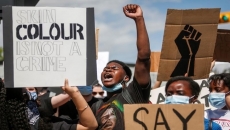
Anti-racism protesters march in Toronto; Trudeau calls systemic racism real

Anti-racism protesters march in Toronto; Trudeau calls systemic racism real
The head of Toronto's police service took a public knee on Friday in solidarity with marching anti-racism demonstrators protesting police killings of black people, with similar demonstrations planned in other Canadian cities.

Anti-racism protesters march in Toronto; Trudeau calls systemic racism real

Trudeau offers $14B to provinces for anti-COVID-19 efforts through rest of year

Trudeau offers $14B to provinces for anti-COVID-19 efforts through rest of year
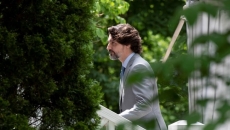
Prime Minister Justin Trudeau says the federal government is offering $14 billion to the provincial and territorial governments for measures to keep COVID-19 at bay.

Trudeau offers $14B to provinces for anti-COVID-19 efforts through rest of year

Vancouver doubles height for mass-timber development from six to twelve storeys

Vancouver doubles height for mass-timber development from six to twelve storeys
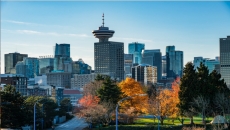
Amendments to the city's building bylaw approved by Council last week will allow mass timber construction up to 12 storeys for residential and commercial uses, doubling the current height limit of 6 storeys. With changes taking effect on July 1, permitting taller mass timber construction within the Building By-law will make it easier to build with low carbon materials, support housing affordability, and remove barriers for the construction industry at a time of crisis and economic recovery.

Vancouver doubles height for mass-timber development from six to twelve storeys

COVID-19 modeling data highlights safe distancing benefits as B.C. reopens

COVID-19 modeling data highlights safe distancing benefits as B.C. reopens
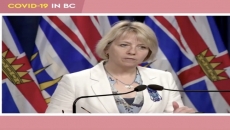
New COVID-19 modelling information highlights the virus-fighting benefits of safe distancing protocols as British Columbia reopens the province while the pandemic progresses.

COVID-19 modeling data highlights safe distancing benefits as B.C. reopens

Top Mountie in Kelowna transferred after videos show officer punching suspect

Top Mountie in Kelowna transferred after videos show officer punching suspect
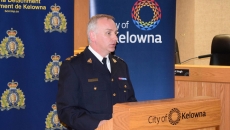
The top Mountie in Kelowna, B.C., has been transferred to another job days after videos emerged of an officer punching a suspect. Supt. Brent Mundle is taking a new position with the senior management team of the force's Southeast Division based in the Okanagan city.

Top Mountie in Kelowna transferred after videos show officer punching suspect