WINNIPEG — People have been walking across the United States border to claim refugee status for years, but a Winnipeg immigration lawyer says he's not used to seeing them cross over in the bitter cold.
When they arrive, says Bashir Khan, they are often thirsty and hungry.
For some, the first Canadian they meet is a farmer who welcomes them inside and offers a meal.
"They'll cook up 12 eggs and let a poor, hungry refugee claimant wolf if all down," says Khan.
It's the migrant who asks to speak with border officials or police, he adds. "The refugee claimant is the one begging them to call, not the other way around."
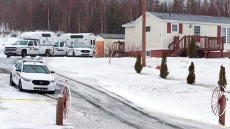
Khan has 17 clients who have braved the weather in recent months to cross into Manitoba as an "irregular arrival." RCMP have said that last weekend 22 people walked from North Dakota into Emerson-Franklin. The majority were put up in a community hall and fed by volunteers.
Officials in Emerson say they've recently seen more border jumpers following planned new restrictions in the United States on refugees.
The Canada-U.S. Safe Third Country Agreement requires people to apply for asylum in the first country they arrive. If they have already applied as a refugee in the U.S. before showing up at a border port in Canada, and have no blood relatives here, they are turned away.
But if a person crosses into Canada somewhere else and then applies as a refugee, the case is heard in the Canadian system.

The Canada Border Services Agency says 11,000 refugee claimants were processed at designated ports last year. Figures released earlier this week show more than 2,000 claimants entered "irregularly," with growing numbers in Manitoba, Quebec, British Columbia and Yukon.
Khan says he has only ever had clients walk across the border into Manitoba in warmer months.
"They always come when winter breaks in the spring until late fall ... In the last seven years, I've never seen anyone come in the dead of winter and risk life and limb."
Two men from Ghana were severely frostbitten in December when they crossed the border at Emerson. It speaks to their desperation to get to Canada, says Khan.
Refugee claimants are released after meeting with a border officer for a couple of hours, Khan says. They have 15 days to file a claim and a hearing date is set in three to four months.
During that time, they may connect with friends or family or an immigration agency to find a place to live. But many don't have money. Some end up in homeless shelters and rely on legal aid, says Winnipeg immigration lawyer Alastair Clarke.
"I've had clients who just show up to my office every week or so because they don't have email. They don't have telephone. They struggle with the language, transportation," he says.
"They have some help — but they have limited help — so they do what they can."
They can apply for work permits but that takes three to four months and, by then, their cases have usually been decided, Clarke says.
Erick Ambtman with the Edmonton Mennonite Centre for Newcomers says some claimants do make their way to communities further north, such as Edmonton, to stay with family. "In which case we would be potentially supporting their claim like helping them with documentation and things like that."

Agencies like his also have emergency funds to help with food, clothing and counselling and some short-term housing, he says.