With an uptick in new cases of COVID-19 in Canada sparking concerns about a second wave of the illness, advocates for seniors in long-term care say more federal support must start flowing immediately to ensure elders do not again become the primary casualties.
The Canadian Association for Long Term Care says the sector has long fallen through the cracks and that this lack of support helped create conditions that led to widespread COVID-19 outbreaks and deaths in nursing homes across Canada.
Now that the pandemic has laid bare the fragility of the long-term care system, association chair Jodi Hall says the Liberals have to dedicate more infrastructure dollars to nursing homes.
"Historically, the federal government has failed to support this sector ... It is imperative they help the sector by providing access to existing federal infrastructure dollars," she said Wednesday.
Long-term care homes were uniquely vulnerable to COVID-19, combining an already-sick patient base with a new coronavirus, to which nobody has immunity. Nursing homes in Canada are often older and feature shared bedrooms, bathrooms and dining rooms, which made containing COVID-19 a challenge in the early days of the pandemic when little was known of its ability to spread through asymptomatic people, Hall noted.
Ottawa could alleviate these pressures in the future by allowing nursing homes to access funds through the national housing strategy, she said. Homes could also be placed at the top of the list of "shovel-ready" projects likely to get federal and provincial stimulus dollars as part of economic recovery efforts.
"These are simple and readily available solutions that could have been and can still be implemented quickly to support provinces and operators in modernizing long-term care homes."
Earlier this month, the Royal Society of Canada released a scathing report on the state of long-term care in Canada, accusing the country of failing in its duty to protect vulnerable elders.
It found the pandemic was a "shock wave" that exposed many long-standing deficiencies in the system and that, while the causes of this systemic failure are complex, they are rooted in what the authors called "systemic and deeply institutionalized implicit attitudes about age and gender."
A whopping 81 per cent of Canada's COVID-19 deaths happened in long-term care homes, far higher than what is reported in comparable countries, including 31 per cent in the United States, 28 per cent in Australia and 66 per cent in Spain.
The findings in this and other recent studies exposing the cracks in the system are nothing new to those on the front lines, Hall said.
Since 2017, the Canadian Association for Long Term Care has met with over 60 MPs, various cabinet ministers and dozens of federal policy advisers asking them to address the urgent needs of seniors housing and care, but she says their concerns have not been heard.
With Statistics Canada figures showing the number of seniors over 65 is expected to rise by 25 per cent by 2036 and the number of Canadians over 80 to double between 2011 and 2036, the association hopes governments will finally step in with help and stop arguing about jurisdictional issues.
"Seniors and their families do not care about who is, strictly speaking, responsible for what parts of senior-care delivery," Hall said.
"The argument that the federal government distributes funds and provinces provide programs might have been a thoughtful argument in the past, in the 80s and 90s, but the demographics today are completely different," she said.
"The federal government cannot ignore the aging crisis any longer."
In addition to capital investments, the national body is also pushing for a pan-Canadian health human-resources strategy to address rising challenges with attracting and retaining workers in the seniors sector — another key stressor that has been blamed on the COVID-19 outbreaks.
The federal government has committed some emergency aid to help long-term care homes as part of the $19-billion "Safe Restart Agreement" reached with the provinces last week, including money for testing and personal protective equipment.
Daniel Pollak, a spokesman for Seniors Minister Deb Schulte, said $780 million of this total will support one-time costs over the next six to eight months for measures to control and prevent infections, which "could include addressing issues in long-term care."
Pollak also pointed to other emergency assistance that has benefited care homes since the pandemic hit, including money for essential worker salary top-ups, ordering and distributing PPE and military troops deployed to over 50 long-term care facilities in Quebec and Ontario.
But Donna Duncan, CEO of the Ontario Long-Term Care Association, says the federal and provincial amounts committed and spent to date on nursing homes fall far short of the immediate emergency needs of homes across the country.
This money will also do nothing to address systemic and chronic underfunding of the sector, Duncan said.
"Significant infrastructure investments are going to be required as well as just the immediate response to COVID-19," she said.
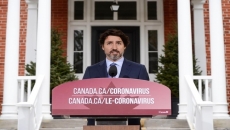
Last month, Prime Minister Justin Trudeau said deeper reforms of the long-term care system are likely needed, but he remained firm that it would be up to the provinces to lead those discussions.