
Sunday, February 1, 2026
ADVT 
National

Alberta government announces indefinite freeze on industrial carbon price

Darpan News Desk The Canadian Press, 12 May, 2025 01:12 PM
  • Alberta government announces indefinite freeze on industrial carbon price

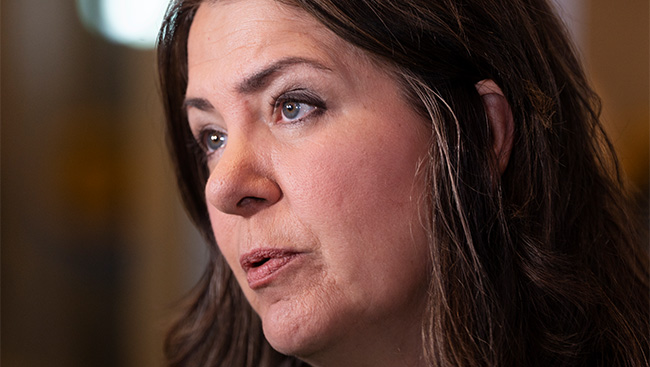
Alberta Premier Danielle Smith says her government is freezing its industrial carbon price effective immediately at $95 per tonne of emissions.

Smith told reporters Monday the move is critical to keep industry competitive and defend jobs as Canada navigates a tariff fight with the United States.

"With the change in government south of the border, it is essential that we have a reasonable carbon pricing system, not one that will price our industries out of global markets," she said.

"We are providing certainty, stability and economic relief to the businesses that contribute so much to all of Canada. And we are supporting the energy producers whose expertise and innovation are quite literally shaping the world's energy future."

The price had been set to rise to $110 per tonne in 2026 and was to continue increasing to $170 per tonne by 2030.

Environment Minister Rebecca Schulz said going over $100 a tonne would make the province “wildly uncompetitive.”

She said the freeze, which is indefinite, doesn't mean Alberta is giving up on its emission reduction goals.

"We are absolutely a leader when it comes to energy and resource development, but also when it comes to emissions reduction," Schulz said.

"Instead of punishing our industry, we want to allow them to grow, thrive, continue to increase production and reduce global emissions all at the same time."

Picture Courtesy: THE CANADIAN PRESS/Darren Calabrese

MORE National ARTICLES

Tariff uncertainty foils 'slam dunk rebound year' for national home sales: CREA

Tariff uncertainty foils 'slam dunk rebound year' for national home sales: CREA
The Canadian Real Estate Association downgraded its forecast for home sales this year, while it also reported Tuesday the number of homes that changed hands across the country in March fell 9.3 per cent compared with a year ago.

Tariff uncertainty foils 'slam dunk rebound year' for national home sales: CREA

Ottawa says automakers that keep building in Canada will get a tariff exemption

Ottawa says automakers that keep building in Canada will get a tariff exemption
Automobile companies that continue to manufacture vehicles in Canada will get an exemption from Ottawa's retaliatory tariffs as U.S. President Donald Trump attempts to upend the North American industry through steep import duties.

Ottawa says automakers that keep building in Canada will get a tariff exemption

Canadians turn their backs on U.S. travel, as return trips plunge: StatCan

Canadians turn their backs on U.S. travel, as return trips plunge: StatCan
Canadian visits to the United States plummeted last month amid anger over tariffs and annexation threats from its president, on top of growing fears about treatment at the border.

Canadians turn their backs on U.S. travel, as return trips plunge: StatCan

Metro Vancouver's TransLink plans fare and tax hikes for better service

Metro Vancouver's TransLink plans fare and tax hikes for better service
TransLink is proposing a plan to improve its services, ease overcrowding and finish projects, but it will involve a fare hike and a tax increase for Metro Vancouver residents. 

Metro Vancouver's TransLink plans fare and tax hikes for better service

Former B.C. MLA launches CentreBC party, wants to 'push back' against polarization

Former B.C. MLA launches CentreBC party, wants to 'push back' against polarization
A former member of the British Columbia legislature has launched a new political party called CentreBC, aiming to push back against what she describes as polarization in provincial politics.

Former B.C. MLA launches CentreBC party, wants to 'push back' against polarization

Signs of drought in B.C.'s latest snow, water supply bulletin

Signs of drought in B.C.'s latest snow, water supply bulletin
British Columbia's overall snowpack increased slightly throughout March, but the average is still sitting at just 79 per cent of what's considered normal and the province is sounding the alarm about the potential for drought.

Signs of drought in B.C.'s latest snow, water supply bulletin