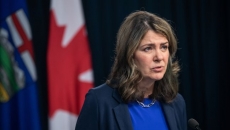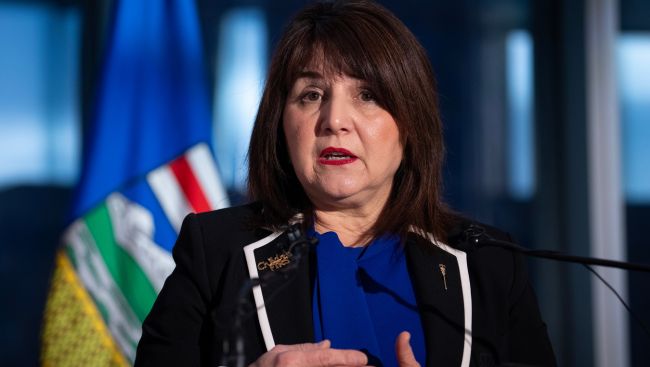
The Alberta cabinet minister in charge of primary care says legislation is coming — but won't provide details — amid reports the province plans to let doctors work in the public and private health systems simultaneously as they see fit.
"I can't speak to the specifics of legislation before it gets into the house, but I am always looking for opportunities to make sure that Albertans have increased access to the supports and the resources that they need," Adriana LaGrange told reporters at the legislature Tuesday.
"I'll have more to share in a little while."
Her statement comes as The Globe and Mail newspaper reported that, according to documents it had obtained, Alberta is considering legislative changes that would permit doctors to work in both systems.
The Globe report says the province is considering creating new types of physicians.
The first would see doctors bill the province for patient care as usual. The second would see doctors quit the public system entirely and run private clinics where patients are billed at rates set by doctors. The third would see physicians split their time between public and private models.
The report said the government would have the power to restrict which types of services physicians can provide and bill for privately.
Doctors can already quit the public system in Alberta if they choose, but it's not immediately clear just how many have.
The third option would be a first in Canada, and the Canadian Medical Association, which represents physicians across the country, warned Tuesday that it could lead to Albertans waiting longer to see their family doctors.
"The evidence from around the world is clear: where a parallel private health system operates, both health outcomes and access to care are worse," association president Dr. Margot Burnell said in a statement.
"Alberta's private care plans may similarly weaken an already challenged public health system."
Opposition Alberta NDP Leader Naheed Nenshi told reporters the government was pushing "American-style medicine" and its plan would only punish low-income Albertans.
During question period Tuesday, Nenshi called on Premier Danielle Smith to call an election over the issue.
Smith responded: "Let me tell you what we will do: we are going to continue to create the very best environment for doctors and specialists to work here."
The advocacy group Friends of Medicare called on the province to scrap its plans, and put its time and effort into supporting the public health-care system.
Chris Gallaway, the organization's executive director, said in a statement Tuesday that the government's plan paves a path toward "two-tiered" health care that "if allowed to pass, would unequivocally bulldoze a path for American-style health care in Alberta."
Gallaway also questioned how the potential changes kept Alberta in line with federal law governing how provinces provide health-care services as part of funding agreements with Ottawa.
Federal Health Minister Marjorie Michel's office said Tuesday that Health Canada officials were engaging with the Alberta government over the changes to get a better understanding of the implications.
"We have a collaborative approach with all provinces and territories to ensure all Canadians continue to have equitable access to medically necessary care based on their medical needs, not their ability to pay," a spokesperson for Michel said.
The government's plan drew praise from the Montreal Economic Institute think tank, which pointed to Denmark where the same public and private model is allowed.
"Under existing rules, working privately means forfeiting the opportunity to help out in the public health-care system, effectively forcing doctors to choose one or the other," the Institute said in a release.
Emmanuelle Faubert, an economist with the think tank, said Denmark's model should be replicated.
“The Alberta government understands that universal and government-run are not synonymous,” Faubert said in the release.
“Successes abroad demonstrate this, and we are glad that Alberta is prepared to take an evidence-based approach to addressing the chronic wait times facing patients.”
Picture Courtesy: THE CANADIAN PRESS/Todd Korol