Alberta's government has named its own provincial police force and announced its first chief.
Former deputy Calgary police chief Sat Parhar has been tapped to lead the new force, which the province says it intends to call the Alberta Sheriffs Police Service.
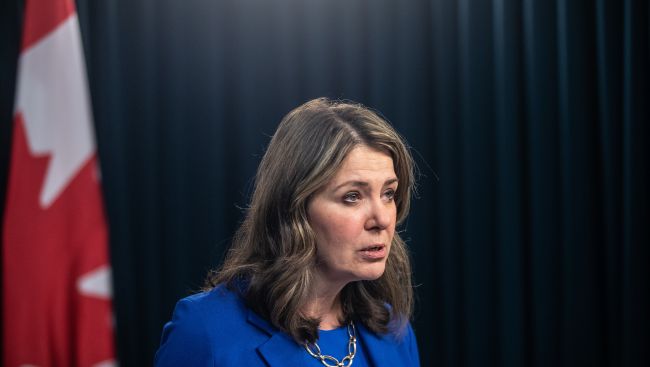
Premier Danielle Smith said Wednesday that the new service, which will be based in Calgary, isn't meant to replace the RCMP entirely, though municipalities will have the option to contract the new service for their policing needs instead of the Mounties.
The agency will also support RCMP detachments and pick up the slack where they're falling, she said.
"We want to make sure that everybody feels that they've got the policing that they need close to home," she told a Calgary news conference, adding the province has already had "a couple" of inquiries from municipalities.
Smith also said that by creating the force, Alberta is preparing for a reality where Ottawa ends contract community policing in 2032, when the RCMP's existing contracts across Canada are set to expire.
"Alberta's government is preparing and acting instead of waiting and reacting," she said. "Our goal is to put solutions in place before serious challenges develop."
Public Safety Minister Mike Ellis, speaking alongside Smith, said Alberta's new force would be a viable option to replace the RCMP come 2032.
Ellis also said the new agency will report to a civilian oversight board and not the provincial government, despite being a Crown corporation.
As of April, Alberta had a little more than 1,200 sheriffs taking care of — among other things — inmate transportation, enforcing traffic laws and investigating problem properties used for drug trafficking and gang-related crimes.
Earlier this year, the province also committed $29 million to have sheriffs bolster Alberta's border security.
Roughly half of the existing sheriffs perform duties similar to those of police officers, though Ellis's office could not say how many would be transferred to the new agency under Parhar.
"The new agency was always intended to assume police-like duties currently performed by the Alberta Sheriffs," said press secretary Arthur Green.
"Planning work is ongoing and we will provide further information once decisions have been made."
Smith said Parhar, who retired from the Calgary Police Service in 2019, has the appropriate leadership skills and experience to launch the new service from the ground up.
While with the Calgary Police Service, Parhar was subject to an investigation by Alberta's police watchdog for allegedly obstructing justice, though he was later cleared of any wrongdoing.
Parhar, speaking alongside Smith and Ellis, said his first order of business as chief is to hire an executive team and develop standards for recruitment, training and operations.
"We are building a police service that reflects Alberta, its people, its communities and its future," he said.
Opposition NDP public safety critic David Shepherd questioned why Smith's government was moving forward with a provincial police force despite promising a possible referendum on the subject as early as next year.
"On the one hand, they're saying we'll have a referendum. On the other hand, they're moving forward and not doing any consultation," Shepherd said.
"They're making it up as they go along."
Shepherd said creating a provincial police force was "a zombie idea" that Albertans have repeatedly spoken against, and criticized the government for "refusing to let it go."
Ellis said earlier this year that Alberta has put aside $6 million this year to hire the new service's chief, senior staff and cover initial setup costs.
Alberta's government has named its own provincial police force and announced its first chief.
Former deputy Calgary police chief Sat Parhar has been tapped to lead the new force, which the province says it intends to call the Alberta Sheriffs Police Service.
Premier Danielle Smith said Wednesday that the new service, which will be based in Calgary, isn't meant to replace the RCMP entirely, though municipalities will have the option to contract the new service for their policing needs instead of the Mounties.
The agency will also support RCMP detachments and pick up the slack where they're falling, she said.
"We want to make sure that everybody feels that they've got the policing that they need close to home," she told a Calgary news conference, adding the province has already had "a couple" of inquiries from municipalities.
Smith also said that by creating the force, Alberta is preparing for a reality where Ottawa ends contract community policing in 2032, when the RCMP's existing contracts across Canada are set to expire.
"Alberta's government is preparing and acting instead of waiting and reacting," she said. "Our goal is to put solutions in place before serious challenges develop."
Public Safety Minister Mike Ellis, speaking alongside Smith, said Alberta's new force would be a viable option to replace the RCMP come 2032.
Ellis also said the new agency will report to a civilian oversight board and not the provincial government, despite being a Crown corporation.
As of April, Alberta had a little more than 1,200 sheriffs taking care of — among other things — inmate transportation, enforcing traffic laws and investigating problem properties used for drug trafficking and gang-related crimes.
Earlier this year, the province also committed $29 million to have sheriffs bolster Alberta's border security.
Roughly half of the existing sheriffs perform duties similar to those of police officers, though Ellis's office could not say how many would be transferred to the new agency under Parhar.
"The new agency was always intended to assume police-like duties currently performed by the Alberta Sheriffs," said press secretary Arthur Green.
"Planning work is ongoing and we will provide further information once decisions have been made."
Smith said Parhar, who retired from the Calgary Police Service in 2019, has the appropriate leadership skills and experience to launch the new service from the ground up.
While with the Calgary Police Service, Parhar was subject to an investigation by Alberta's police watchdog for allegedly obstructing justice, though he was later cleared of any wrongdoing.
Parhar, speaking alongside Smith and Ellis, said his first order of business as chief is to hire an executive team and develop standards for recruitment, training and operations.
"We are building a police service that reflects Alberta, its people, its communities and its future," he said.
Opposition NDP public safety critic David Shepherd questioned why Smith's government was moving forward with a provincial police force despite promising a possible referendum on the subject as early as next year.
"On the one hand, they're saying we'll have a referendum. On the other hand, they're moving forward and not doing any consultation," Shepherd said.
"They're making it up as they go along."
Shepherd said creating a provincial police force was "a zombie idea" that Albertans have repeatedly spoken against, and criticized the government for "refusing to let it go."
Ellis said earlier this year that Alberta has put aside $6 million this year to hire the new service's chief, senior staff and cover initial setup costs.
Picture Courtesy: THE CANADIAN PRESS/Jason Franson