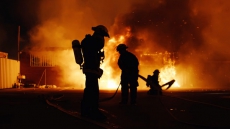
FORT MCMURRAY, Alta. — Alberta officials are taking a second look at their plan to allow people to return home to Fort McMurray after a raging wildfire spread north toward oilsands plants.
The fire overnight destroyed a 665-room workcamp north of the city and two other camps are threatened by the flames.
Two explosions in the city damaged 10 homes and poor air quality forced staff working to clean the hospital and natural gas utility workers to leave.
Premier Rachel Notley says the focus of firefighting efforts would be protecting oilsands plants north of Fort McMurray.
The wildfire has grown to about 3,550 square kilometres.
SAFETY COMMISSION SAYS NO DANGER FROM RADIOLOGICAL DEVICES AFTER ALBERTA WILDFIRE
FORT MCMURRAY, Alta. — The Canadian Nuclear Safety Commission says there is no risk to the public or the environment from radiological devices that could have been affected by the wildfire in Fort McMurray.
The commission sent two radiation safety specialists to the oilsands city last Thursday after getting a request for assistance from Alberta's provincial emergency operations centre.
Those specialists have completed field verifications and confirm that the devices stored in about 20 locations are OK.
The equipment, including radiography cameras used to check welding work and portable gauges to measure density of roadways, is all in packaging designed to survive building or vehicle fires.

The specialists were also asked to check a radioactive waste site just south of Fort McMurray that is under the control of Atomic Energy of Canada.
The fire burned over the site, but the commission says the specialists confirmed that there is no safety concern.
The waste is from the 1930s to the 1950s, when uranium ore was transported from the Northwest Territories to the railhead at what is now Fort McMurray. Some of the uranium spilled along the route. The cleanup was completed in 2003.
The site has about 43,000 cubic metres of low-level radioactive waste made up of low-grade uranium ore residue and contaminated soil. It is fenced in, capped with a thick layer of soil and basically looks like grassy hills.
The vegetation on top burned, but a spokeswoman for Atomic Energy of Canada said last week that there is no worry about the site catching fire.
More than 2,400 homes and buildings were destroyed in the wildfire and 530 were damaged, but firefighters have been credited with saving up to 90 per cent of the city.