Falling oil prices and trade troubles continue to threaten Alberta's finances, but the province's deficit is expected to shrink only slightly.
It has been pegged at $6.4 billion, down $40 million from a projected $6.5 billion this summer.
The latest update still means this year's budget represents a massive multibillion-dollar swing from an $8.3-billion surplus last year.
The biggest factor is a 30 per cent decline in natural resource revenue since last year.
While February's budget projected the price of West Texas Intermediate oil — the North American benchmark — to be US$68 a barrel, the province now predicts it will average US$61.50 per barrel.
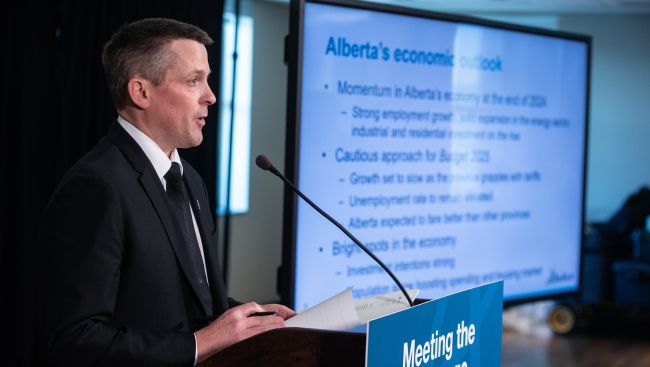
Finance Minister Nate Horner said the government will prioritize essentials such as health care, education and infrastructure, but "tough choices" lie ahead given the 2.5 per cent population growth expected this year.
"To meet these pressures, we must stay disciplined and make every fiscal decision count," he said.
He pointed to the United Conservative Party government's efforts to keep spending increases below population growth and inflation.
"My goal right now is to show Albertans that we're trying to be very thoughtful with your expenses," he said.
Alberta is reporting record high oilsands production, but global trends are "expected to keep a lid on demand and prices" for the rest of the fiscal year, budget documents say.
The province has estimated that every dollar drop in the per-barrel WTI price slashes $750 million from Alberta's treasury.
At the same time, ongoing trade wars with China and the United States continue to weigh down the province's agriculture, manufacturing and lumber exports.
Alberta's recent rapid population growth is expected to slow next year. But the province is still under added pressure, having topped five million residents earlier this year.
Recent labour agreements with large public sector unions, including those representing teachers, registered nurses and civil servants, mean the province needs to dip into its contingency fund to the tune of about $881 million.
Of the $4 billion set aside for emergencies, $1.7 billion has been spent.
Underpinning the fiscal picture is overall spending of $79 billion, a small increase from February's budget but a jump of $5.3 billion from what Alberta spent last year.
Total revenue for 2025 is set to be $73 billion, a drop of $1.2 billion from the budget earlier this year.
Taxpayer-supported debt is expected to be $82.9 billion by March, an increase from $82.5 billion, due to the deficit.
The government is also projecting more deficits in the future. Horner, when asked what "tough choices" may include, said the government will continue to prioritize health care and education.
"I'll think we'll have to continue to prioritize from within, and it'll probably be continued cannibalization of everything else," he said.
Opposition NDP finance critic Court Ellingson said despite positive news, such as gross domestic product growing quickly in the province, Albertans are still facing high unemployment and low wage growth.
Ellingson said Horner's talk of tough choices means "many Albertans should be concerned about the upcoming budgetary process and what we're going to see in February."
Picture Courtesy: THE CANADIAN PRESS/Jason Franson