
Sunday, February 8, 2026
ADVT 
National

Another $650M in COVID-19 aid bound for Indigenous communities, Miller says

Darpan News Desk The Canadian Press, 29 May, 2020 06:02 PM
  • Another $650M in COVID-19 aid bound for Indigenous communities, Miller says

The federal government is planning to spend $650 million more to help Indigenous communities cope with the pandemic, after months of First Nations, Inuit and Metis leaders saying the previous amount was inadequate.

Prime Minister Justin Trudeau says $285 million of this will support rapid public health responses in Indigenous communities when faced with an outbreak of COVID-19.

"These funds will go toward more nurses, will help procure specialized supplies and will support work with First Nations, Inuit and Metis communities on continued community-driven responses," Trudeau said Friday outside his Rideau Cottage residence.

The federal government had previously committed $305 million to help First Nations reserves, and Inuit and Metis communities, with supplies, medical care and facilities to allow for physical distancing.

Since that initial funding was announced in March, Indigenous leaders from across Canada have said it would not be enough to prevent the most vulnerable people from falling through the cracks.

National Chief Perry Bellegarde of the Assembly of First Nations applauded the new investment Friday, saying he had once again urged Trudeau to do more during a recent conversation.

"Today, (Indigenous Services) Minister Marc Miller and Prime Minister Justin Trudeau made the necessary commitments to help ensure no one is left behind," Bellegarde said in a tweet.

Although the first wave of COVID-19 appears to be receding, the threat of a second wave is real and Indigenous communities continue to be among the populations most vulnerable due to long-standing health and social disparities in their communities, Miller said.

"The federal government has a direct responsibility to provide direct health care in some First Nation communities and these funds enable us to live up to our obligation to provide quality care and support them, especially so in times of crisis," he said.

The money announced Friday will also go to some of the most vulnerable individuals and families who rely on the on-reserve income assistance program, so they don't have to choose between food and rent during the crisis.

The program will see a $270 million increase overall, with $139 million of this funding going toward direct COVID-19 response, and the remainder going toward sustaining base funding for this program to ensure continuity for its clients through the crisis.

"Our collective goal is to make sure individuals and families can go through this pandemic with the most support that they can get — that they can face this new reality with as little stress and anxiety as possible when it comes to their income and that they can, first and foremost, stay safe and healthy," Miller said.

Since the pandemic began, groups and shelters that work with Indigenous women have reported a sharp rise in domestic violence as COVID-19 restrictions keep families in their homes.

To address these concerns, Miller announced Ottawa will spend $44.8 million over five years to build 10 shelters in First Nations communities and two in the territories to help women and children fleeing violence.

The government will also provide $40.8 million to support operational costs for these new shelters over the first five years, and $10.2 million annually after that.

Ottawa is committing a further $1 million a year for engagement with Metis leaders and service providers to provide shelter to women fleeing violence and assist in community-led violence prevention projects.

"No one should have to stay in a place where they are unsafe, no one should be forced to choose between violence or homelessness," Trudeau said.

"These new shelters will offer a path forward when people need it most."
MORE National ARTICLES

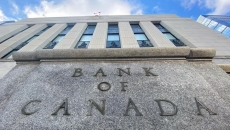
The Bank of Canada announced that it is holding its interest rate target at 0.25 per cent

The Bank of Canada announced that it is holding its interest rate target at 0.25 per cent
The Bank of Canada is warning that the downturn tied to COVID-19 will be the worst on record and that the economic recovery will depend on the effectiveness of current measures to bring the pandemic under control. The bank announced that it is keeping its key interest rate target on hold at 0.25 per cent, saying that it is effectively as low as it can go to combat the economic impacts of COVID-19.

The Bank of Canada announced that it is holding its interest rate target at 0.25 per cent

Liberals ease access to emergency COVID-19 benefit, plan to top-up wages

The federal government is making changes to its COVID-19 programs to send emergency aid to seasonal workers without jobs and those whose hours have been drastically cut but who still have some income. The changes will also allow people who are making up to $1,000 a month to qualify for the Canada Emergency Response Benefit, as well as those whose employment insurance benefits have run out since the start of the calendar year.    

Liberals ease access to emergency COVID-19 benefit, plan to top-up wages

Canada focused on fighting COVID-19 Trudeau steers clear of WHO controversy

Prime Minister Justin Trudeau refused Wednesday to join the escalating global debate about the World Health Organization's handling of the COVID-19 crisis, insisting Canada remains focused on working with experts around the world to combat the pandemic. Trudeau repeatedly batted back questions about Donald Trump's plan to halt funding to the UN agency and review what the U.S. president says was a failure to properly assess the threat posed by the novel coronavirus back in January.

Canada focused on fighting COVID-19 Trudeau steers clear of WHO controversy

With strong control measures, the federal public health agency projects that 11,000 to 22,000 Canadians could die of COVID-19 in the coming months

Canada could see the end of the first wave of the COVID-19 epidemic before autumn, according to federal projections, but only if strong physical distancing measures are strictly maintained the whole time. Even in that best-case scenario, the federal public health agency projects that a total of 4,400 to 44,000 Canadians could die of COVID-19 in the coming months.    

With strong control measures, the federal public health agency projects that 11,000 to 22,000 Canadians could die of COVID-19 in the coming months

Canada lost more than a million jobs in March, but April may be even worse

The Canadian economy lost an unprecedented one million jobs in March — the worst recorded single-month change — as the COVID-19 crisis began to take hold, lifting the unemployment rate to 7.8 per cent, Statistics Canada reported Thursday. The loss is eight times worse than the previous one-month record, yet economists warned it will likely be even worse in April, when the impact of physical distancing practices and other measures became clearer and millions of Canadians began receiving emergency federal aid.

Canada lost more than a million jobs in March, but April may be even worse

The latest numbers on COVID-19 in Canada

Total number of cases broken down by province and the total number right across the country. 

The latest numbers on COVID-19 in Canada