
Monday, December 22, 2025
ADVT 
National

Anti-racism protesters march in Toronto; Trudeau calls systemic racism real

Darpan News Desk The Canadian Press, 05 Jun, 2020 05:54 PM
  • Anti-racism protesters march in Toronto; Trudeau calls systemic racism real

The head of Toronto's police service took a public knee on Friday in solidarity with marching anti-racism demonstrators protesting police killings of black people, with similar demonstrations planned in other Canadian cities.

As officers generally kept a low profile, several hundred people walked peacefully to city hall chanting, "I can't breathe," "No justice, no peace," or "Hands up, don't shoot." Others held signs reading "Racism is a pandemic, too" or "Silence is violence."

The demonstrations followed protests across the U.S. after a video showed a white Minneapolis officer kneeling on the neck of a black man, George Floyd, for nearly nine minutes even as he pleaded that he couldn't breathe. He died on the sidewalk.

Reports and video of problematic police encounters with minorities in Canada have also surfaced recently.

"We're fed up. We need change and we do not trust police," said one protester, John Coleman. "Black lives really matter."

Chief Mark Saunders and other uniformed officers met a group of protesters, then the chief removed his hat and took a solidarity knee at a downtown intersection near police headquarters.

"We see you and we are listening," Saunders, who is black, tweeted after the meeting. "We have to all stay in this together to make change."

Several businesses on downtown Yonge Street and area boarded up their windows in anticipation of Thursday's protest and others planned for the city over the weekend. The landmark Eaton Centre closed until Monday as a precaution.

"Even though Toronto boarded up everything — they must have thought that we were going to be on some crazy hooligan stuff that they only show on the news — but we actually came out here for positivity to get our message out," said one participant, Blake Gabriel.

Another protester, Junae Watson, said she wanted to show black people are equal to other races.

"People have this conception that Canada doesn't have a lot of racism, which isn't true," Watson said, adding she was happy with the turnout.

In Ottawa, Prime Minister Justin Trudeau called videos and reports from across the country in recent weeks "disturbing." Those include an encounter between an Indigenous man and the RCMP in Nunavut.

While each case needed to be investigated, Trudeau said the larger issue of systemic racism in policing was long-standing and needed addressing.

"Far too many Canadians feel fear and anxiety at the sight of law enforcement officers," Trudeau said. "Over the past weeks, we've seen a large number of Canadians suddenly awaken to the fact that the discrimination that is a lived reality for far too many of our fellow citizens is something that needs to end."

Change, he said, needed to start immediately but would not happen overnight.

Demonstrators also planned to march from Parliament Hill through Ottawa's streets in an event organized by No Peace Until Justice, formed by a young black woman. The goal was to bring together black activists and organizations and allies to stand in solidarity against police brutality and societal racism.

Organizers asked police to stay away and said they had not invited Mayor Jim Watson, who said he would attend. The group also said it opposed all live-streaming and video or photos of the demonstration to protect the identity and safety of those attending.

For their part, Ottawa police said public safety was a shared responsibility.

"You have a right to be heard," the police service said on Thursday. "We will support that right by ensuring your safety."

Participants must recognize the COVID-19 pandemic is not over and police were working with organizers and Ottawa public health officials to make personal protective equipment available to demonstrators, the force added.
MORE National ARTICLES

Ferries, orchestra retract layoffs, await subsidy

Vancouver Symphony Orchestra and BC Ferries have rescinded lay-off notices in anticipation of receiving the Canadian government's emergency wage subsidies. Both BC Ferries and the symphony had planned layoffs to take effect on the Easter weekend as the COVID-19 pandemic drains away their businesses.

Ferries, orchestra retract layoffs, await subsidy

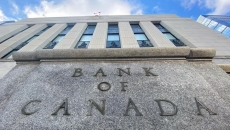
The Bank of Canada announced that it is holding its interest rate target at 0.25 per cent

The Bank of Canada announced that it is holding its interest rate target at 0.25 per cent
The Bank of Canada is warning that the downturn tied to COVID-19 will be the worst on record and that the economic recovery will depend on the effectiveness of current measures to bring the pandemic under control. The bank announced that it is keeping its key interest rate target on hold at 0.25 per cent, saying that it is effectively as low as it can go to combat the economic impacts of COVID-19.

The Bank of Canada announced that it is holding its interest rate target at 0.25 per cent

Liberals ease access to emergency COVID-19 benefit, plan to top-up wages

The federal government is making changes to its COVID-19 programs to send emergency aid to seasonal workers without jobs and those whose hours have been drastically cut but who still have some income. The changes will also allow people who are making up to $1,000 a month to qualify for the Canada Emergency Response Benefit, as well as those whose employment insurance benefits have run out since the start of the calendar year.    

Liberals ease access to emergency COVID-19 benefit, plan to top-up wages

Canada focused on fighting COVID-19 Trudeau steers clear of WHO controversy

Prime Minister Justin Trudeau refused Wednesday to join the escalating global debate about the World Health Organization's handling of the COVID-19 crisis, insisting Canada remains focused on working with experts around the world to combat the pandemic. Trudeau repeatedly batted back questions about Donald Trump's plan to halt funding to the UN agency and review what the U.S. president says was a failure to properly assess the threat posed by the novel coronavirus back in January.

Canada focused on fighting COVID-19 Trudeau steers clear of WHO controversy

With strong control measures, the federal public health agency projects that 11,000 to 22,000 Canadians could die of COVID-19 in the coming months

Canada could see the end of the first wave of the COVID-19 epidemic before autumn, according to federal projections, but only if strong physical distancing measures are strictly maintained the whole time. Even in that best-case scenario, the federal public health agency projects that a total of 4,400 to 44,000 Canadians could die of COVID-19 in the coming months.    

With strong control measures, the federal public health agency projects that 11,000 to 22,000 Canadians could die of COVID-19 in the coming months

Canada lost more than a million jobs in March, but April may be even worse

The Canadian economy lost an unprecedented one million jobs in March — the worst recorded single-month change — as the COVID-19 crisis began to take hold, lifting the unemployment rate to 7.8 per cent, Statistics Canada reported Thursday. The loss is eight times worse than the previous one-month record, yet economists warned it will likely be even worse in April, when the impact of physical distancing practices and other measures became clearer and millions of Canadians began receiving emergency federal aid.

Canada lost more than a million jobs in March, but April may be even worse