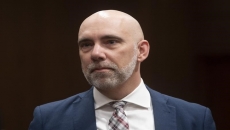
A former federal health minister who championed decriminalization in Canada says a three-year model approved for British Columbia may not provide ample evidence to ensure the success of a policy that should have been implemented across the country.
Jane Philpott said in an interview the evidence from Portugal, the first European country to decriminalize small amounts of drugs for personal use in 2001, could not be assessed for several years after other health, legal and housing measures were also put in place for entrenched drug users.
"Three years of a small piece of a whole package will not be enough to be able to say whether this works or doesn't," she said of Canada's plan in B.C. "And in some ways, there's anxiety over the failure to demonstrate its success."
Decriminalization is slated to go into effect in B.C. at the end of January 2023, when those 18 and over will not face criminal penalties for possessing a total of 2.5 grams of opioids, cocaine, methamphetamine and MDMA, also known as ecstasy. Police would no longer confiscate drugs.
Philpott visited Portugal when she was the health minister and said decriminalization there is effective because it's part of a comprehensive approach that allows people found with illicit drugs to go before a panel that includes medical, legal and social service workers who can offer them supports for any addiction issues.
"That's one of the reasons why doing a teeny bit in the direction of decriminalization doesn't allow us to be able to actually see what a fulsome, comprehensive response to substance use is," Philpott said.
She served as Liberal health minister between 2015 and 2017. Philpott is now dean of health sciences at Queen's University in Kingston, Ont., where she also works as a family doctor.
Federal Minister of Mental Health and Addictions Carolyn Bennett said Tuesday the seven-month delay in implementing an exemption to the Controlled Drugs and Substances Act would allow police to be trained to refer drug users to voluntary health services and for health authorities to put supports in place.
However, Philpott said there wasn't a need to wait so long for decriminalization, which should be part of a national plan because the death toll from the toxic drug supply is too high across the country.
"When 20 people a day are dying of overdoses and toxic drugs and ongoing stigmatization and all of the other harms associated with illicit drug use are at a crisis point, I think it could be implemented sooner, if there were the will for that."
On Wednesday, the federal government voted down an NDP private member's bill calling for decriminalization across the country.
Philpott said the legalization of cannabis in 2018 has shown "the sky has not fallen," and there's now widespread acceptance by the public for decriminalization across a country where over 27,000 people died from toxic street drugs between 2016 and September 2021.
"I think there's a lot of political fear of talking about decriminalization. And I think Canadians are ready for it, I think they want to have a grown-up conversation about this."
Canada could also learn lessons from other European countries like Switzerland and Germany, which provide safer drugs including injectable opioids to prevent deaths, Philpott said.
Matt Sutton, spokesman for the New York-based Drug Policy Alliance, said decimalization in Oregon, starting in February 2021, was considered a success after the first year, but there have been some challenges.
"There were over 16,000 people who have already accessed services so that was a huge win because these were services that were completely voluntary, nobody was forced into them," Sutton said.
"The biggest things that people have taken advantage of so far is harm-reduction services and housing support. To us, that's not surprising because those are the entry points so we can eventually get them into treatment."
Sutton said people caught with drugs, which can be carried in various amounts depending on the substance, face a $100 fine unless they call a hotline for services.
Fears that the fine would be a deterrent have not materialized, he said, adding it has instead been an incentive for getting support.
"What we've seen is that police haven't been issuing a whole lot of citations, and it varies from jurisdiction to jurisdiction, which we see as a benefit because the whole idea was to remove police from the picture and have a public health approach."
However, Sutton said much of the funding for services has not yet been delivered as promised to voters who wanted action on the overdose crisis and voted for decriminalization in a ballot initiative.
"We are really struggling with that and really working with the Oregon Health Authority and the legislature to streamline that process," he said.
Data from the Centers for Disease Control and Prevention in the United States shows 1,069 people fatally overdosed in Oregon in 2021, up from 880 a year earlier.