The artificial turf lining fields across Metro Vancouver is leaching a chemical that's deadly to coho salmon into municipal stormwater systems, says a study by researchers at the University of British Columbia.
The study, published this month in the journal "Environmental Science Processes & Impacts," found the fields release a tire chemical known as 6PPD-quinone, which researchers traced to the turf's crumb rubber infill made from recycled tires.
Researchers collected samples of the infill from 12 fields across Metro Vancouver, as well as stormwater from the drainage systems of three fields during rainstorms. The artificial turf had been in place for between one and 14 years.
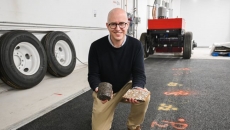
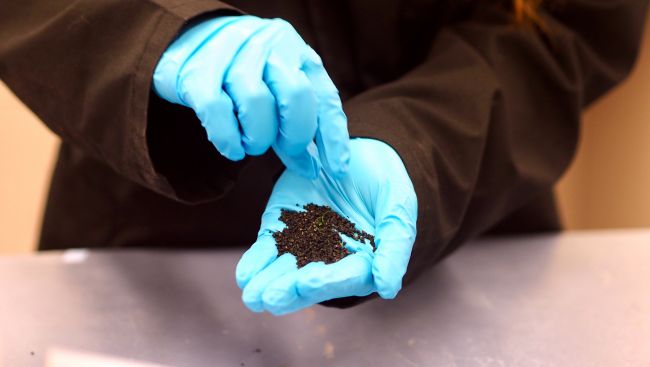
"That black rubbery stuff in artificial turf fields is actually ground-up used tires. And we thought there was potential that when it rains, those small black particles would leach contaminants into the water," said Rachel Scholes, an assistant professor in environmental engineering at UBC and the study's co-author.
The study found the fields released 6PPD-quinone and other chemicals known to harm aquatic life, and could continue to release 6PPD-Q "throughout their lifetime" of around eight to 15 years.
"These infill materials release both toxic trace metals as well as 6PPD-Q into water," Scholes said.
Stream watchers and environmentalists in British Columbia have raised concerns about the chemical because other studies found it is particularly lethal to coho salmon.
Scholes said the amount of 6PPD-quinone released exceeded the lethal concentration values for coho salmon, and would be deadly if they came in contact with it.
She added that other species, including juvenile cutthroat trout, have been shown to be harmed by the chemical.
Because many turf fields include a drainage layer underneath, the water that drains through gets collected into a stormwater pipe, Scholes said.
That water then connects to stormwater infrastructure for the city, or is discharged into surface waters without being treated by a wastewater treatment plant.
"That's the largest concern for us," Scholes said.
She said the amount of 6PPD-quinone doesn't seem to be depleting in the fields over time, which means it is likely to continue releasing the chemical every time it rains. The study's authors estimated that about one per cent of the chemical in a given field was released over the course of a year.
Scholes noted a single artificial turf field contains around 125 tonnes of crumb rubber, the equivalent of 20,000 tires.
The salmon-harming chemical isn't the only one researchers found in the fields. Scholes said there were metals such as copper and zinc, which could be toxic to aquatic life, as well as rubber materials that might come from the green grassy part of the turf.
Scholes said municipalities could mitigate the risk the chemicals pose to salmon and other species by using alternative turf infill materials, though she noted they tend to be more expensive.
"Another possibility would be to install a treatment system underneath the field in order to capture contaminants that come off it before they enter the stormwater conveyance system," she suggested.
Scholes stressed that the artificial turf fields are "a potential hazard for wildlife and for the aquatic environment. And we really need to do something about that."
In April 2024, after environmental organizations wrote to the federal government asking for an assessment of 6PPD under the Canadian Environmental Protection Act, Ottawa agreed to add the chemical as a "priority for assessment"
Picture Courtesy: THE CANADIAN PRESS/Handout — Lou Bosshart/UBC