As Australia moves to ban social media for children under 16, Quebec is debating whether to follow suit.
The provincial government decided last spring to study the possibility of setting a minimum age for social media accounts, following a push from the youth wing of the governing Coalition Avenir Québec.
But a committee examining the issue has been hearing mixed opinions on the idea, with some experts suggesting a ban would be difficult to enforce and could do more harm than good.
The Australian Senate passed a social media ban for children under 16 on Thursday, which is set to become a world-first law. The ban could be a model for other jurisdictions looking to combat the mental health impacts of social media use among young people.
The law will make platforms including TikTok, Facebook, Snapchat, Reddit, X and Instagram liable for fines of up to $45 million for failing to prevent children younger than 16 from holding accounts.
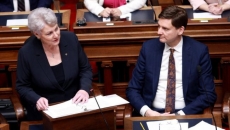
“We were happy to see this measure approved by the Australian government. It gave us hope for what we proposed,” Aurélie Diep, president of the youth wing of the CAQ, said in an interview. “So for us, it is very positive news.”
Quebec Premier François Legault initially ridiculed the idea of a minimum age for social media when it was proposed by the opposition Parti Québécois in May. But he changed his tune after Diep published an open letter calling for a ban on social mediaaccounts for children younger than 16.
Soon after, the government opted to create a special committee to study the effects of screens on young people, including the possibility of a ban.
Diep, 22, said she began to use social media around the age of 14 or 15, though some of her friends encouraged her to join earlier by lying about her age. Platforms like Facebook, TikTok and Snapchat all require users to be at least 13 years old. She said young people are struggling with poor concentration and lost sleep due to time spent on their phones.
“In the evening, before I go to bed, I say to myself, ‘one last look at Instagram and then I’m going to bed,’” she said. “And then I might spend an hour on it.”
In May, La Presse reported the results of a survey that showed 71 per cent of adult respondents in Quebec said they supported a social media ban for minors.
The special committee has just finished a two-week tour of 18 schools. Amélie Dionne, the CAQ member of the legislature chairing the committee, said they heard from many students who support a ban, but many also said they’ve lied about their age to create social media accounts.
“There’s a certain paradox there,” she said. “The big observation we made from this tour is … that, in fact, young people want to be supervised, they want to have supervision.”
Still, the special committee has heard a range of opinions since it began holding hearings in the fall, with some experts suggesting a ban could further isolate vulnerable children.
“I don’t think it’s desirable … for young people who are going to seek a lot of social support on social networks, in online communities,” Emmanuelle Parent, co-founder of an organization that promotes healthy online habits, told the committee in September. “I don’t think it’s going to solve the problems of cyberbullying, either.”
Sara Eve Levac, a lawyer with Option consommateurs, a non-profit focused on consumer rights, said there are privacy concerns around age verification. “There is currently no miracle solution for how to verify a child’s age to access digital platforms,” she told the committee.
Diep said there are ways to improve age verification, such as having parents validate their children’s age when they open social media accounts.
Dionne said the committee is going to look more closely after the holidays at how a minimum age could be enforced. The committee is expected to publish its report by the end of May 2025.
Australia’s legislation requires social media platforms to take reasonable steps to keep out users under 16 years old, but it doesn’t specify what those steps are. Platforms will have one year to work out how they can implement the ban before penalties are enforced. A government-commissioned evaluation of age-assurance technologies will report in mid-2025 on how young children could be excluded.
Quebec banned cellphones from elementary and secondary school classrooms starting in January, but they can still be used between classes. Education Minister Bernard Drainville has said the government is interested in an outright ban on cellphone use in schools.