The flow of asylum seekers using Roxham Road has slowed slightly, but locals like Susan Heller who live near the country's busiest illegal crossing know that can change in a hurry.
Heller's farm in southwestern Quebec is not far from the ditch at the U.S. border that has drawn international attention with thousands of crossings in the past two years. She volunteers as part of Bridges not Borders, a group of locals who've been calling attention to the migrants' plight.
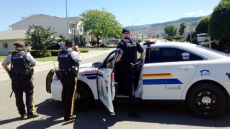
Every Sunday, a few members of the group head to the American side of the border in Champlain, N.Y. to hand out water in the summer and warm clothes in the winter to the dozen or so asylum seekers crossing on foot. They greet the taxis and shuttle buses dropping the migrants off before they cross the border and disappear into a temporary building the RCMP built this year on the Canadian side. An American counterpart covers the other six days of the week.
"We have, let's say, half a minute to say 'Welcome!' " said Heller, who has lived on Roxham Road for 51 years, about a kilometre from the border. "They are very stressed because this is the last hurdle before they get to Canada, so they're really not listening to you .... We mostly say to them, they're going to be okay."
Heller's once-quiet stretch of rural road has become ground zero for an intensifying debate on immigration, in the province and in the country.
Coalition Avenir Quebec Leader Francois Legault, who was elected Premier Oct. 1, complained in 2017 that the border was becoming a "sieve." Last April, Jean-Francois Lisee, then leader of the Parti Quebecois, proposed a fence blocking off the crossing.
The Coalition's winning election platform included a promise to reduce all immigration into Quebec — including refugees — by 20 per cent. And since Legault's election, he has demanded that Ottawa pay $300-million to cover the costs of health, education and other services provided to the migrants.
Paul Clarke, executive director of Action Refugies Montreal, an advocacy group that works with refugees, said the rhetoric surrounding newcomers to the country is likely to get more heated with a federal election around the corner.
"I think there’s going to be a lot of things said by a lot of people, and the more extreme views sometimes get the most publicity," Clarke said. "It's important that we keep the context in terms of human rights and recalling that we're talking about — people who are leaving difficult situations wherever they are."
The flow of irregular border crossers over the last two years has led to a backlog of refugee claims at the Immigration and Refugee Board, with wait times of close to two years before claims are heard. Clarke called for added resources from the federal government to accelerate the process.
"The quicker they can get resources into the IRB so people have their hearing and they can know what’s happening, the better it is for all concerned," Clarke said.
Prime Minister Justin Trudeau has pledged $173 million to improve border security and decrease the time it takes to process asylum seekers claims. And last week the federal government announced compensation of between $2,500 and $25,000 for residents dealing with increased commotion near the Roxham crossing.
In 2017, more than 90 per cent of the 20,593 irregular crossers into Canada came through Roxham Road. So far in 2018, it is more than 95 per cent.
The latest figures reveal a drop in the number entering in November — 1,019 apprehended across Canada by the RCMP, the lowest figure since June 2017. In November 2017, the number was 1,623.
Francine Dupuis, a spokesperson for PRAIDA, an organization in Quebec that offers medical and social services to asylum seekers, said the numbers crossing in recent months have stabilized. The majority end up working, their kids go to school and her group never hears from them again, she said.
She saw a spike in Haitian arrivals in the summer of 2017. This year Nigerians accounted for the bulk of people her organization helped, but their numbers have recently levelled off. People from other African countries facing strife are over-represented among the irregular arrivals, she said, as are South Americans.
But those trends can shift quickly, and Dupuis said they're ready for whatever happens next. "I'd say we're dealing with the usual crowds of people coming from countries where horrors or wars are happening," she said.
At first, many asylum seekers remained in Quebec, but now, those who don't speak French or don't want to learn tend to head to Ontario, which has had its own problems dealing with the crush and is also seeking federal compensation.
Dupuis notes that Ontario didn't have the same infrastructure in place as Quebec and will have to develop services. "If you don't receive them well, you're going to have problems after, because they integrate much better if you ease their entrance into the country," she said.
Francois Dore, a retired police officer who lives just a few kilometres from the border, said before the dramatic increase in 2017, residents would routinely find asylum seekers roaming the street, heading north, looking to be picked up by authorities so they could begin the refugee claim process.
He said he has no issues with desperate people looking for a better life. "If they can make it, and if they can be an asset to Canada — if they can do well — then all the better," Dore said.
Dore recalled the story of one man, a Yemeni asylum seeker who arrived at Roxham Road two years before the 2017 crush. Dore met the man, a lawyer, as he returned to the border in 2017 with a television crew to see the crossing point again, a pilgrimage that came just a few days before he was to be reunited with his family.
"I remember asking the guy, 'Was it the right choice you made when you crossed the border that way?' " Dore said. "He told me, tears in his eyes, 'It was the only way.' "